

Mesquite (Prosopis sp.) with a fungal fruiting body (cream-colored, bracket-like growth) emerging next to an old, large pruning cut.
Summary
Wood decay fungi enter through wounds such as large pruning cuts, broken limbs and bark damage, then slowly break down the wood inside. Mushrooms, conks or brackets on a trunk or at an old wound are the fungus's fruiting body and a sign that decay is already established inside. The tree can live for years with decay, but the wood loses strength, so the key question is how much sound wood remains.
Key symptoms
- Mushrooms, conks or bracket-like growths on the trunk, root flare or at old wounds.
- Soft, crumbly, stringy or discolored wood in wounds or cavities.
- Hollow sound when the trunk is tapped with a mallet.
- Cracks, bulges or cavities, and sometimes insects such as termites or carpenter ants.
Likely causes, ranked
- Large pruning cuts and topping cuts that the tree cannot close quickly.
- Broken limbs and torn wounds (see Branch Failure guide).
- Mechanical damage at the base from mowers, vehicles or construction.
- Root damage and constant moisture at the root flare from buried trunks or emitters against the base.
Look-alikes and how to tell them apart
- Lichens: flat, crusty, grey-green growths on bark; harmless.
- Sap flow or slime flux: wet, oozing streaks, not a solid fruiting body.
- Mushrooms in mulch: growing from mulch or soil away from roots; usually harmless.
What to check on site
- Where the fruiting bodies are (trunk base and root flare decay is more serious than a small limb).
- Extent of decay: sound with a mallet, probe soft wood, and look for cavities and cracks.
- Lean, cracks and targets in reach.
- Whether a formal risk assessment or decay testing is warranted.
Treatment
- There is no cure for wood decay inside a tree; management is about safety and vigor.
- Remove or reduce limbs with significant decay, especially over targets.
- Do not fill, seal or scrape out decayed wood.
- Avoid new large wounds: prune small and often rather than making big cuts.
- Support vigor with proper watering and root zone protection.
- Removal may be the safe choice when decay is extensive in the trunk or root flare near targets.
What to expect and how to monitor
- Fruiting bodies may come and go seasonally; decay keeps progressing slowly.
- Re-inspect at least yearly and after storms, checking for new cracks, lean or fruiting bodies.
Worried about a tree? Text Justin, ISA Certified Arborist, at (520) 451-8790 or email Justin@TimberxTrees.com. TIMBERx serves Tucson, Oro Valley, Marana, Vail, Sahuarita, Green Valley and Benson.
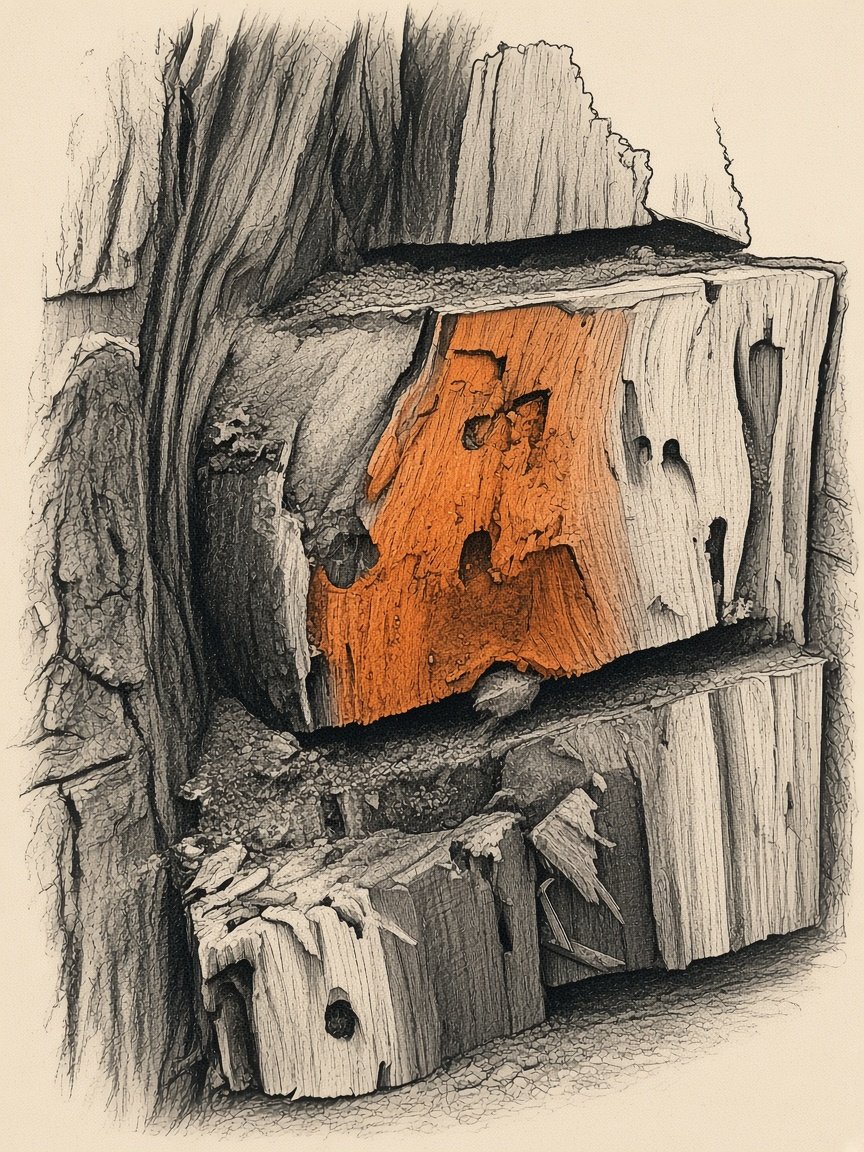
Cut section of a decayed trunk with soft, wet wood and termites working in it; insects often move in after decay.
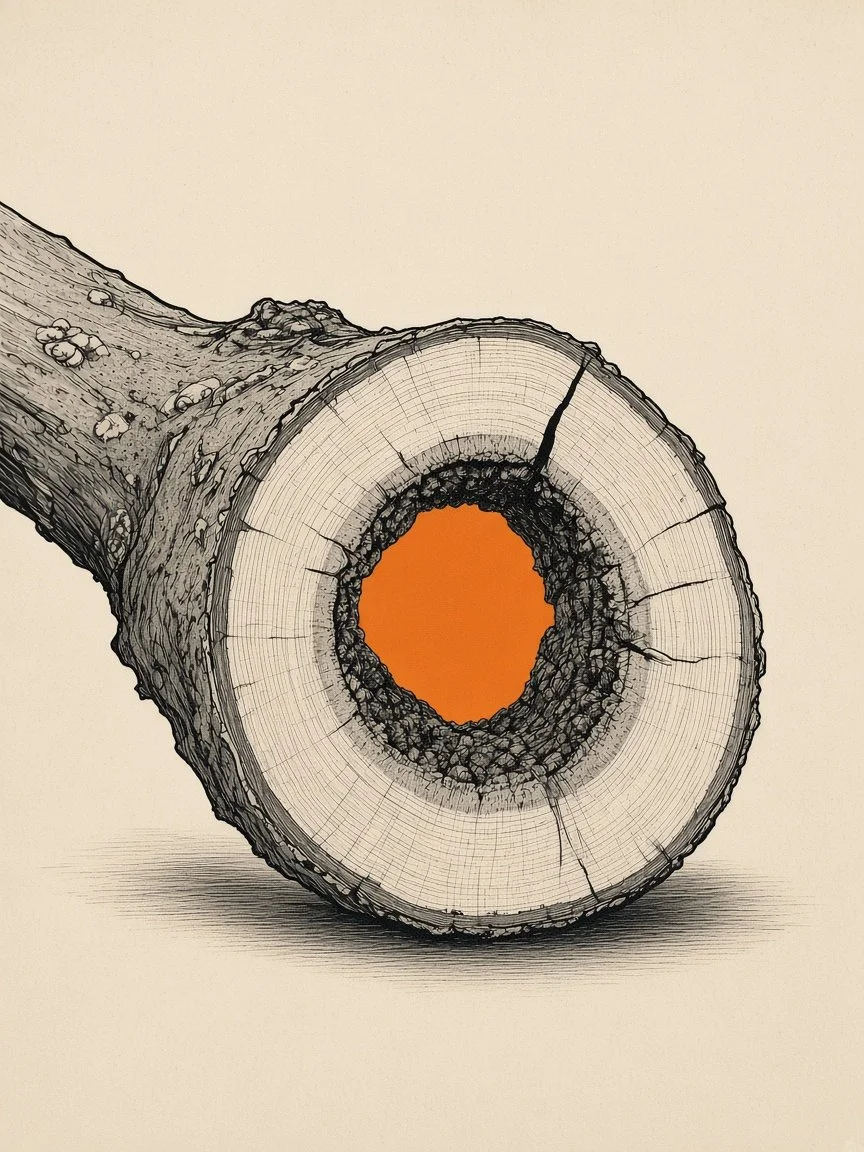
Freshly cut limb on a green-barked tree (appears to be palo verde; species not confirmed) with a dark, hollow decay column in the center of the cut and sound, sapwood around the outside.
