
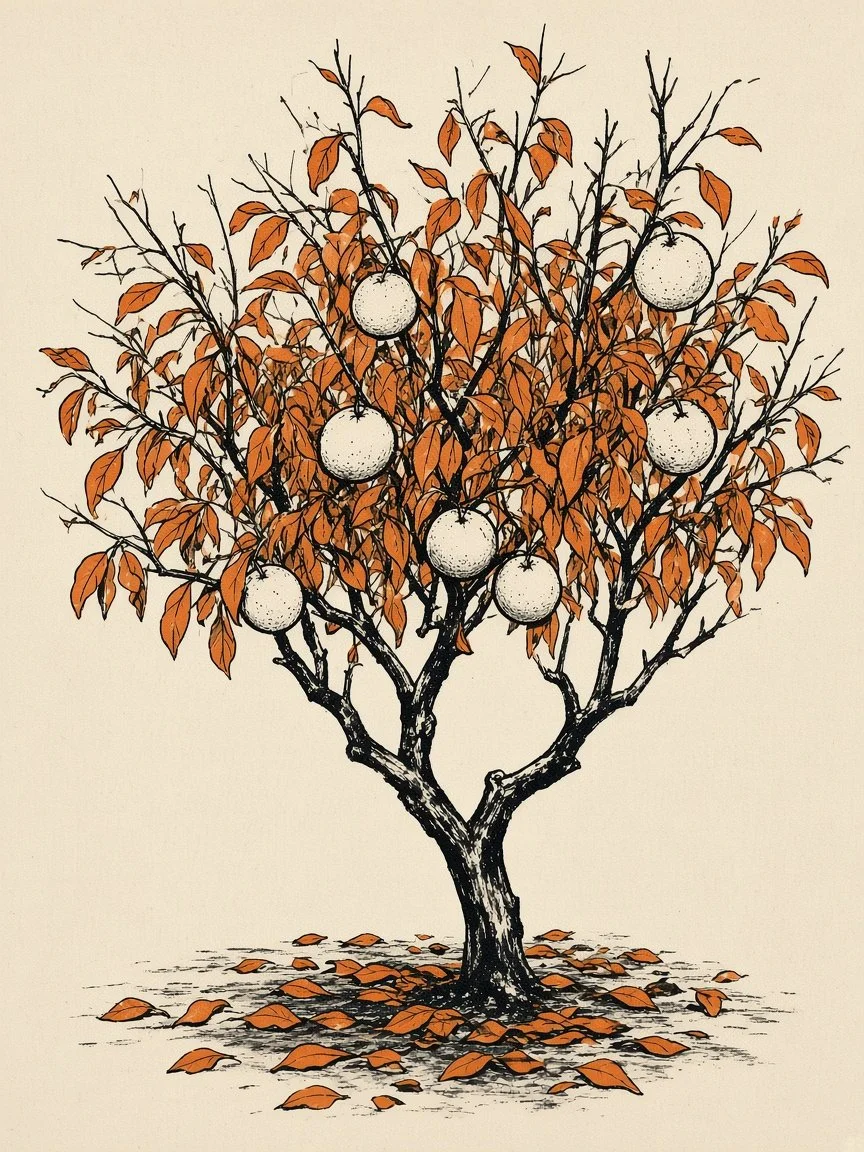
Citrus (fruiting; appears to be grapefruit or orange) with most of the canopy suddenly dried out: brown leaves still hanging, fruit still on the branches, and only a few green shoots left.
Summary
When a citrus tree goes from healthy to brown in a few weeks, with dry leaves hanging on and fruit left on the branches, the roots have usually stopped supplying water fast enough. In Tucson the most common reasons are an irrigation problem during heat, water kept against the trunk or in poorly draining soil that leads to root and crown rot, or root damage. The good news is that citrus often re-sprouts if the trunk and main roots are still alive, so the first job is finding the cause and confirming what is still living.
Key symptoms
- Large parts of the canopy turn brown or drop leaves at once, sometimes the whole tree.
- Dead leaves stay attached for a while instead of falling; green leaves may also drop suddenly.
- Fruit stays on bare branches.
- New green shoots may appear on the trunk and main limbs after the collapse.
- Possible signs at the base: dark, wet or gummy bark near the soil, cracked or peeling bark, or soil kept constantly wet at the trunk.
Likely causes, ranked
- Water stress from irrigation failure or too little deep water in heat. A broken line, clogged emitters, a timer change or a drip system that only wets a small ring at the trunk cannot keep up with summer demand; collapse can be fast and the dry leaves hang on.
- Root and crown rot. Water kept against the trunk, heavy or poorly draining soil, soil or mulch piled on the trunk, and overwatering favor root-rot organisms (such as Phytophthora). Look for dark, gummy, or cracked bark at the soil line.
- Root damage. Trenching, grading, new hardscape or rodent feeding on roots can cut off water suddenly.
- Heat and sun stress on a weakened tree. Extreme heat on a tree that was already struggling can tip it into collapse.
- Freeze damage (only if it followed a hard frost). Freeze injury shows from the outside in and usually appears after winter cold events.
Look-alikes and how to tell them apart
- Normal spring leaf drop: citrus sheds some older leaves as new growth emerges, but the canopy stays mostly green.
- Nutrient chlorosis: leaves turn yellow with patterns but stay on the tree (see Citrus Chlorosis - Manganese & Zinc Deficiency).
- Slow branch dieback: scattered dead twigs over months or years rather than a sudden collapse (see Branch Dieback in the Upper Canopy).
- Salt and drip stress: leaf tips and edges burn first, not a whole-canopy collapse (see Leaf Tip Burn - Salt Buildup & Drip Water Stress).
What to check on site
- Run the irrigation and confirm every emitter works, how much water it puts out and where; check timer settings and run times since summer.
- Probe the soil at several spots out to the drip line and several inches deep: is it dry, or wet and sour-smelling?
- Pull soil and mulch back from the trunk and look at the bark at and just below the soil line for dark staining, gumming, cracks or soft bark.
- Do a scratch test on twigs and main limbs: green under the bark is alive, brown and dry is dead.
- Ask about recent digging, trenching, new paving or rodent activity near the tree.
- Note which side of the canopy failed first and whether the graft union and rootstock are healthy.
Treatment
- Fix the water first. Move emitters off the trunk and out toward the drip line, add emitters or a basin so water soaks deeply and slowly over the root zone, and water on a deep, infrequent schedule matched to the season.
- Keep the trunk dry. Pull soil, gravel and mulch back from the base so the trunk and root flare can dry out.
- If root or crown rot is suspected, improve drainage, cut back watering frequency, and have a sample tested before using any treatment; any product must be used exactly per its label.
- Wait before pruning. Leave dead-looking wood until new growth shows clearly what is alive, then prune back to live wood. Exposed bark may need protection with a white trunk paint made for trees.
- Thin the fruit load on a tree that has lost most of its leaves, to reduce stress during recovery.
- Feed lightly, if at all, only after the tree is pushing new growth again.
What to expect and how to monitor
- If the trunk and roots are alive, new shoots typically appear on the trunk and main limbs within weeks to a few months.
- Recovery of a full canopy can take one or more seasons; fruit may be light the next year.
- Watch for sprouts from below the graft union; those are rootstock and should be removed.
- If no new growth appears, or the bark at the soil line keeps getting worse, the tree may not recover and replacement may be the better choice.
Worried about a tree? Text Justin, ISA Certified Arborist, at (520) 451-8790 or email Justin@TimberxTrees.com. TIMBERx serves Tucson, Oro Valley, Marana, Vail, Sahuarita, Green Valley and Benson.

The same tree from the other side, with much of the canopy bare and leaves on the ground.
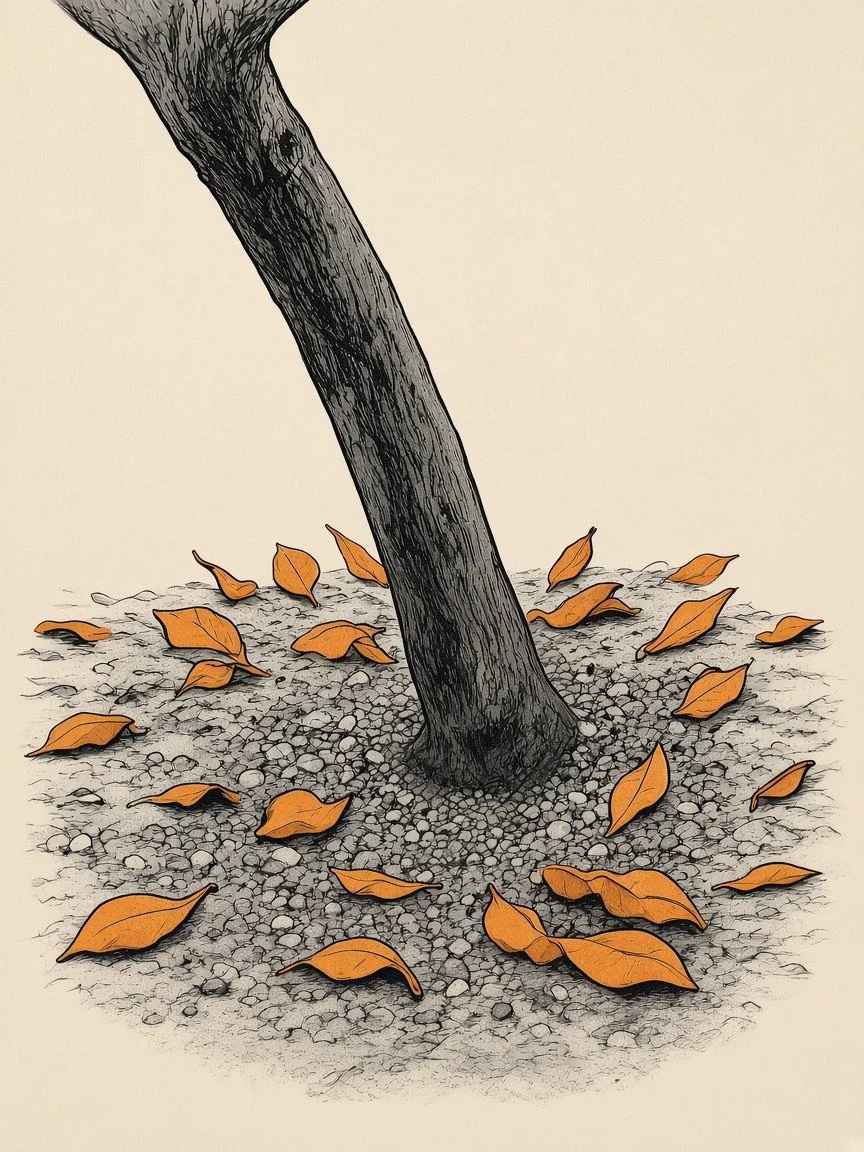
Base of the same tree: dropped leaves under the canopy and drip tubing looped tightly around the trunk.
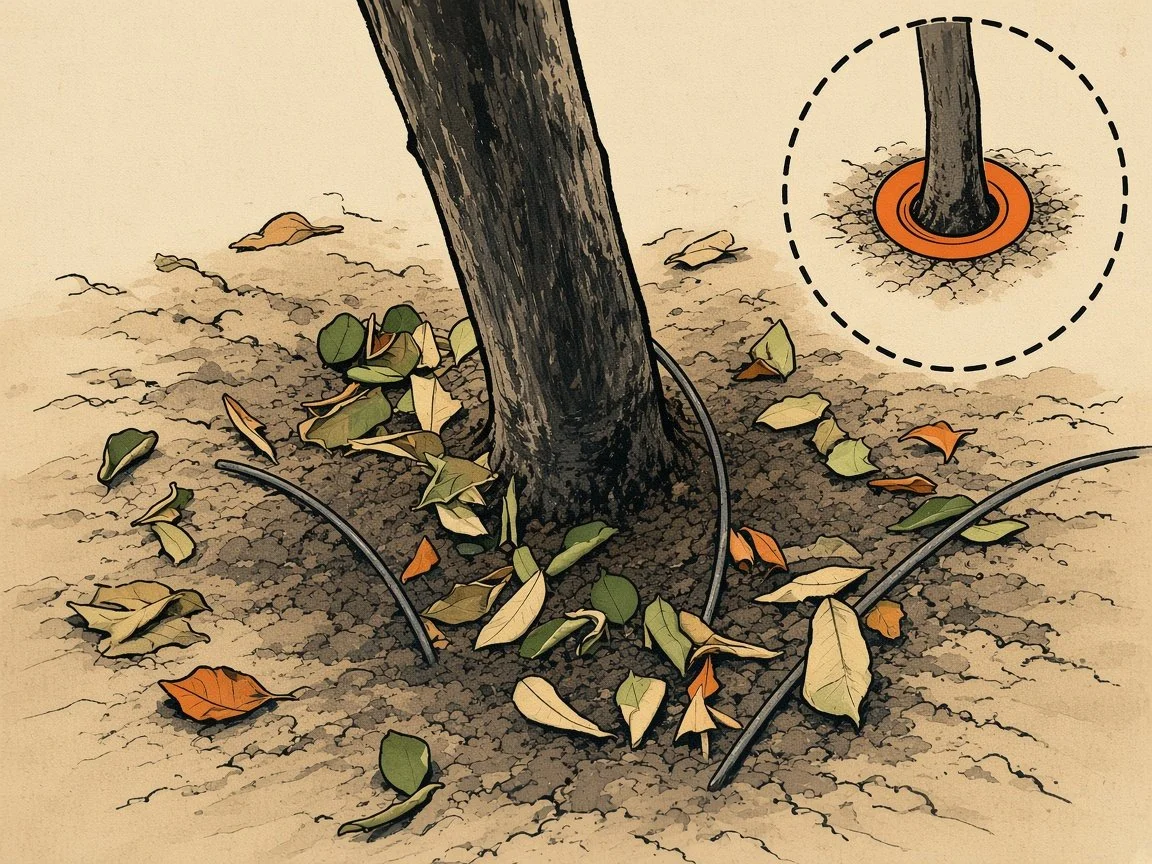
Close view of the trunk base: the drip loop wets only a small ring at the trunk, and many of the fallen leaves are still green.
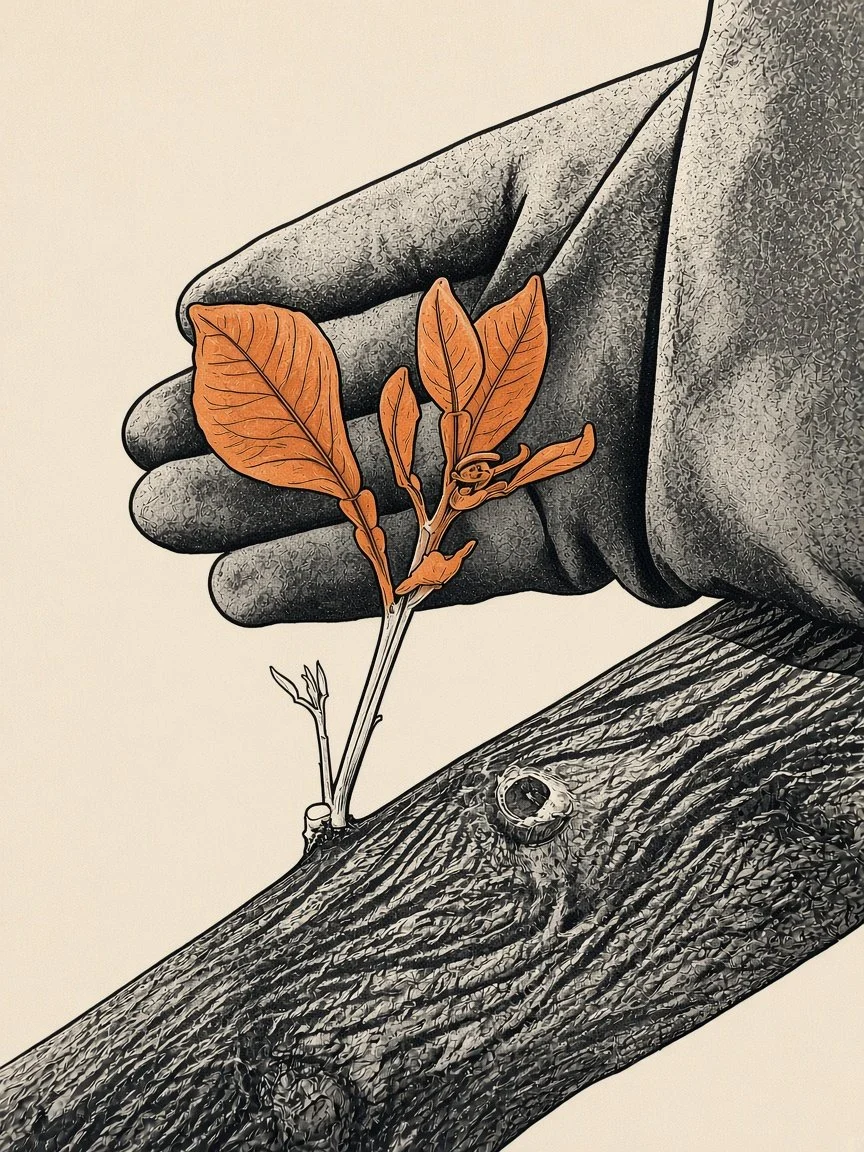
A fresh green shoot pushing from a main limb of the same tree, a good sign that the limb is still alive.
