

Mesquite (Prosopis sp.): an elongated open wound and dark cavity in one of two trunks near the base, with exposed, weathered wood inside.
Summary
An open wound or cavity is an area where bark and outer wood are missing, exposing the inner wood to drying, decay fungi and insects. Trees cannot heal wounds the way people do; they wall them off and grow new wood around the edges. Whether a cavity matters depends on how much sound wood remains around it, where it is, and what it could hit if the stem failed.
Key symptoms
- Missing bark with exposed, grey or dark wood.
- A hollow or pocket going into the stem, sometimes with soft, crumbly or stringy wood inside.
- Rolls of new wound wood (woundwood) forming along the edges.
- Possibly ants, termites or beetle frass in the cavity, or fungal growth on or near it.
Likely causes, ranked
Old mechanical injury. Mowers, string trimmers, vehicles or construction damage at the base of the trunk are common causes on landscape trees. Poor pruning cuts. Flush cuts or large stubs left decades ago allow decay to move into the trunk. Sunscald. On desert trees, south- and west-facing bark exposed after heavy pruning can die and peel, leaving a long vertical wound. Branch failure or a split union that tore bark and wood away. Decay fungi or termites enlarging an existing wound over time.
Look-alikes and how to tell them apart
Included bark seam: a bark-filled crease between two stems, not an open hole (see the Codominant Stems & Included Bark guide). Natural bark texture: mesquite's shaggy, peeling bark is normal; a wound shows bare wood beneath. Canker: sunken, discolored, sometimes oozing bark that is still in place, with dead tissue underneath.
What to check on site
- Size of the cavity compared with the trunk diameter, and how much sound wood remains around it (sounding with a mallet; probing gently).
- Whether the wound is still expanding or is being closed by woundwood.
- Decay signs: soft wood, fungal conks, a sour smell, carpenter ants or termites.
- Lean, cracks or other defects on the same stem, and targets within reach.
- Cause, if it is still active (string-trimmer damage, sunscald exposure).
Treatment
Do not fill, paint or seal the cavity. Wound dressings and fillers trap moisture and can speed decay. Do not scrape out or carve the cavity into healthy wood; that breaks the tree's natural barrier to decay. Trim only loose, torn bark at the edges with a clean, sharp tool so woundwood can form. Stop the cause: keep trimmers and mowers away (mulch ring), and avoid heavy pruning that exposes bark to sun. Support vigor: deep, infrequent watering and protection of the root zone. If the cavity is large or the stem is over a target, a formal risk assessment is warranted; options include weight reduction on that stem, cabling, or removing the stem.
What to expect and how to monitor
- The wound will not disappear; healthy trees slowly roll new wood over the edges.
- Re-check yearly and after storms for new cracks, expansion of the cavity or signs of decay.
Worried about a tree? Text Justin, ISA Certified Arborist, at (520) 451-8790 or email Justin@TimberxTrees.com. TIMBERx serves Tucson, Oro Valley, Marana, Vail, Sahuarita, Green Valley and Benson.
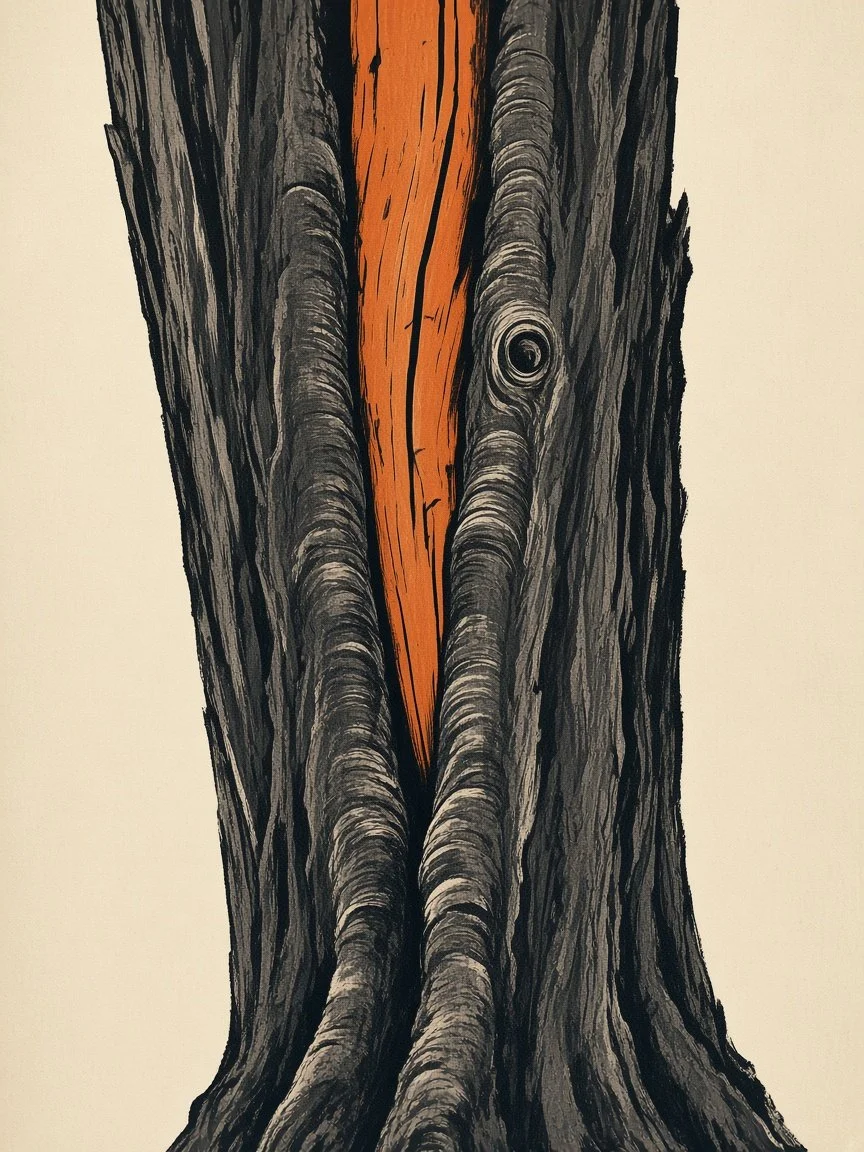
Willow Acacia trunk with a long vertical strip of dead, bare wood and a crack down the center, bordered by thick callus ridges on both sides.
