
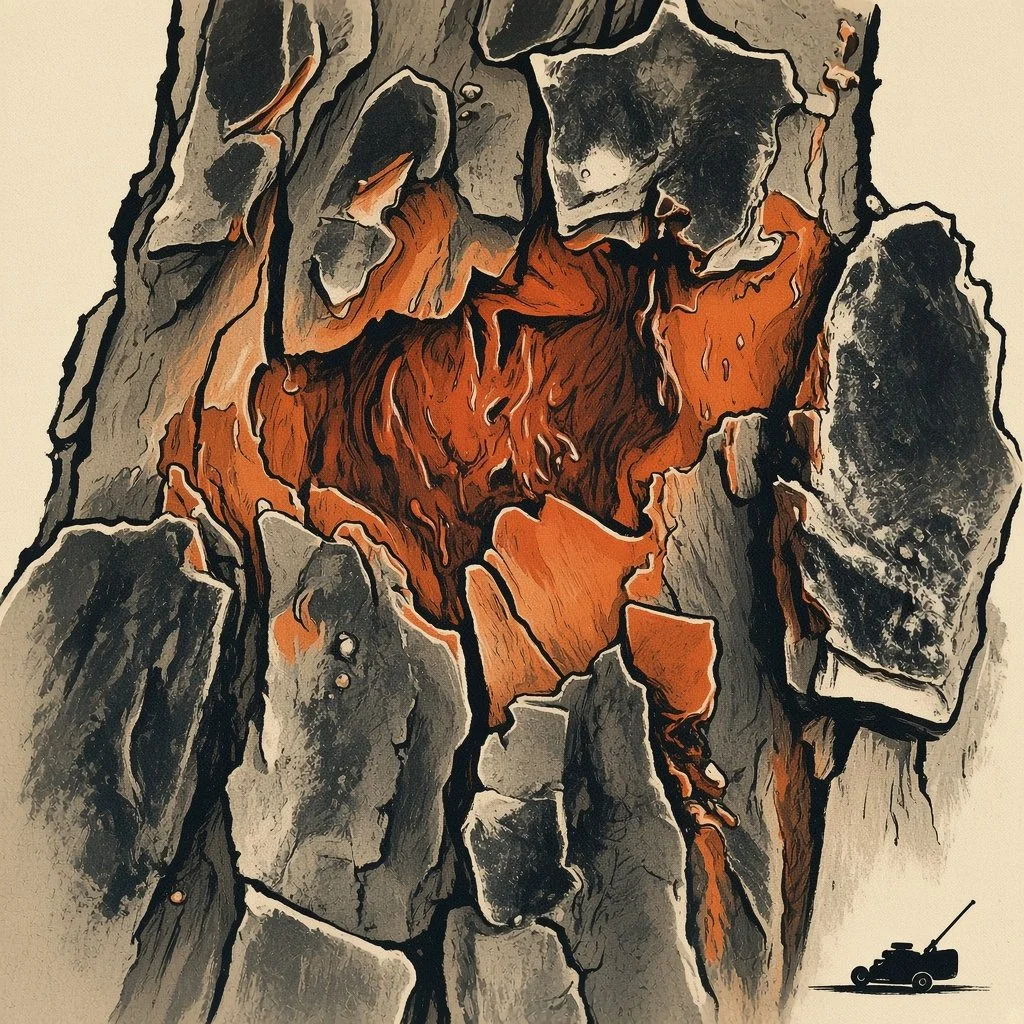
Trunk bark knocked away by a heavy impact, exposing reddish, oozing inner tissue with torn bark around the edges (species not confirmed from the photo).
Summary
A car, mower, trailer or piece of equipment hitting a trunk can tear away the bark and crush the cambium, the thin living layer just under the bark that grows new wood and carries sugars. That tissue is almost certainly damaged under a wound like this one. Trees can't heal the way people do, but they respond strongly: they wall off the damaged wood (compartmentalization) and grow new wound wood in from the edges to cover it. How well that works depends mostly on how much of the trunk's circumference was damaged and how healthy the tree is.
Key symptoms
- Bark scraped, crushed or torn away, often at bumper, trailer or mower height.
- Exposed inner bark or wood that may look reddish, wet or oozing when fresh, and darkens and dries over time.
- Loose, lifted or cracked bark around the edges of the wound.
- Later: a roll of new wound wood forming around the edges.
Likely causes, ranked
- Vehicle impact from cars, trucks or trailers backing up or parking near the tree.
- Lawn and landscape equipment: mowers, string trimmers, skid steers.
- Construction damage from machinery and materials moved near the trunk.
- Other impacts such as falling objects or animals.
Look-alikes and how to tell them apart
- Canker: a sunken, discolored area of bark that develops slowly from disease, usually with no sign of impact.
- Sunscald: long strips of dead bark on the sun-facing side, not a single impact patch.
- Sapsucker damage: neat rows of small holes (see the Sapsucker Damage guide).
- Older wounds and cavities: see the Trunk Wound & Open Cavity guide for how wounds develop if decay sets in.
What to check on site
- Wound size compared with trunk circumference. Damage to a small part of the circumference is usually survivable for a healthy tree. Damage reaching around a large share of the trunk is much more serious, and a wound that girdles most or all of it often leads to decline or death above.
- How deep the damage goes: bark only, or into the wood.
- Loose or torn bark around the edges.
- Cracks or splits running up or down from the wound.
- The cause: is the tree still exposed to repeat impacts?
- Overall tree vigor, and any lean or stability concern.
Treatment
- Clean up the edges: carefully trim loose, torn bark back to firmly attached bark with a sharp knife, making smooth edges (tracing). Remove only dead or detached bark; don't cut into healthy tissue or enlarge the wound.
- Do not use wound paint or sealer. It doesn't stop decay and can trap moisture.
- Prevent repeat hits: add a barrier, boulders, curb stops, a mulch ring, or a trunk guard, and change parking or mowing habits.
- Support the tree: deep, infrequent watering and protecting the root zone help it grow wound wood faster.
- Hold off on heavy pruning while the tree recovers.
What to expect and how to monitor
- Over the next seasons, look for a healthy roll of wound wood forming at the edges. That means the tree is responding.
- Small to moderate wounds on vigorous trees may close over in several years; large wounds may never fully close.
- Check yearly for soft or discolored wood, fungal growth, cracks or canopy dieback above the wound, all signs of decay or decline (see the Wood Decay Fungi guide).
- If the wound is large and the tree is near a home, street or play area, get a risk assessment.
Worried about a tree? Text Justin, ISA Certified Arborist, at (520) 451-8790 or email Justin@TimberxTrees.com. TIMBERx serves Tucson, Oro Valley, Marana, Vail, Sahuarita, Green Valley and Benson.
