
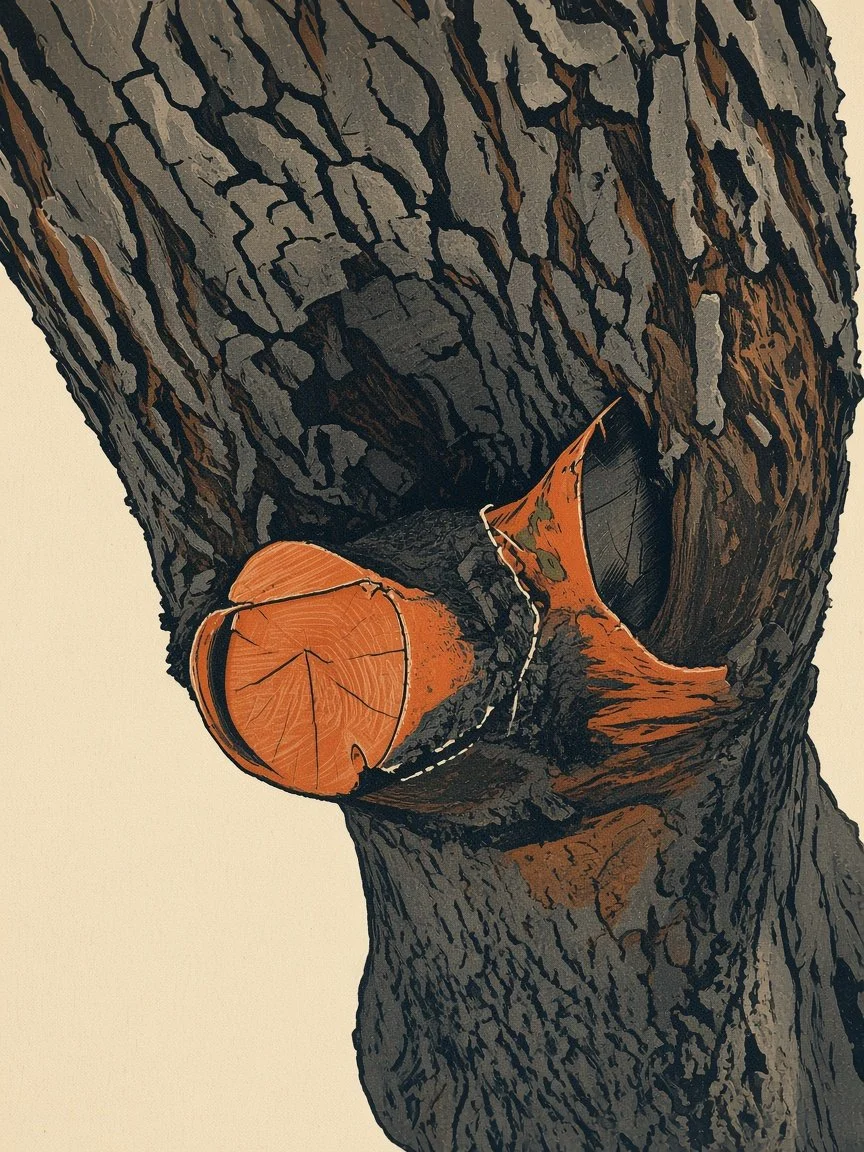
Mesquite Tree with a limb cut off several inches out from the trunk, leaving a stub beyond the branch collar; an older cut sits just beside it.
Summary
How a branch is cut matters as much as which branch is cut. A good cut is made just outside the branch collar (the slightly swollen ring where a branch joins the trunk) and lets the tree seal the wound from the edges. Stubs left too long, flush cuts that remove the collar, torn bark from unsupported limbs, and heading cuts made between branches all leave wounds the tree cannot close well. In Tucson those wounds are also exposed to intense sun and heat, and they become entry points for decay fungi and wood-boring insects.
Key symptoms
- Stubs of dead or sprouting wood sticking out past the branch collar.
- Cuts that sit flat against the trunk, often oval or taller than the branch was wide.
- Torn or stripped bark below a cut where a heavy limb fell before the cut was finished.
- Several large cuts clustered on one stem or at one height.
- Clusters of fast, upright sprouts growing from stubs and heading cuts.
- Over time: dark, sunken or cracked wood at old cuts, sometimes with conks or borer holes.
Likely causes, ranked
- Cutting without finding the branch collar. Stubs and flush cuts both come from not knowing where the collar is; it is the single most common pruning error.
- Not using the three-cut method on heavy limbs. A limb cut in one pass from the top tears down the trunk as it falls, stripping bark well below the cut.
- Heading or topping cuts. Cutting a stem back to a stub between side branches (or to an arbitrary height) leaves wood that dies back and triggers weakly attached sprouts.
- Removing too much or too large at once. Taking out many large limbs in one visit concentrates big wounds and stresses the tree, especially in summer heat.
- Storm breakage left uncleaned. Broken limbs leave jagged stubs until someone makes a proper cleanup cut.
Look-alikes and how to tell them apart
- Proper cuts at the collar: sit just outside the swollen collar, are round rather than long ovals, and begin to roll a ring of new wood (wound wood) inward within a season or two.
- Branch failure: splintered, torn wood with no saw marks (see the Branch Failure & Torn Limbs guide).
- Natural self-pruning: small dead twigs shed by the tree on their own, usually at the collar.
- Trunk wound or cavity: damage on the trunk from equipment, sunscald or decay rather than a branch removal (see the Trunk Wound & Open Cavity guide).
What to check on site
- Locate each cut and note whether it sits at the collar, leaves a stub, or cuts into the trunk.
- Look for wound wood forming around the edges; no growth after a season or two is a warning sign.
- Probe or tap old cuts for soft, hollow or punky wood, and look for conks, ooze or borer holes.
- Count how much live canopy was removed and how many large cuts are on one stem.
- Note sprouts at stubs and heading cuts and how well they are attached.
- Check sun exposure on the newly opened trunk and limbs, especially on south and west sides.
Treatment
- Clean up stubs: re-cut stubs back to just outside the branch collar. Do not cut into the collar or trunk.
- Leave flush cuts alone: they cannot be undone; keep the tree healthy so it can wall off the wound, and monitor for decay.
- Use the three-cut method on any limb heavy enough to tear: an undercut, a top cut farther out to drop the limb, then a final cut at the collar.
- Manage sprouts from heading cuts: over a few years, select one or two well-placed sprouts to become new leaders and remove or shorten the rest.
- Wound dressing is not recommended in most cases; paints and sealers do not prevent decay. Smoothing ragged bark edges with a sharp knife is fine.
- Plan pruning to remove smaller branches more often instead of large ones at once, and avoid heavy pruning of desert trees in peak summer heat.
What to expect and how to monitor
- Good cuts on vigorous trees begin to close from the edges within a season or two; large cuts may never close fully.
- Stubs and flush cuts are the most common places to find decay years later, so check them at each visit.
- Watch heading-cut sprouts as they grow; they are often weakly attached and can break in monsoon winds.
- If decay, cracks or conks appear at an old cut on a main stem, have the tree assessed for structural risk.
Worried about a tree? Text Justin, ISA Certified Arborist, at (520) 451-8790 or email Justin@TimberxTrees.com. TIMBERx serves Tucson, Oro Valley, Marana, Vail, Sahuarita, Green Valley and Benson.
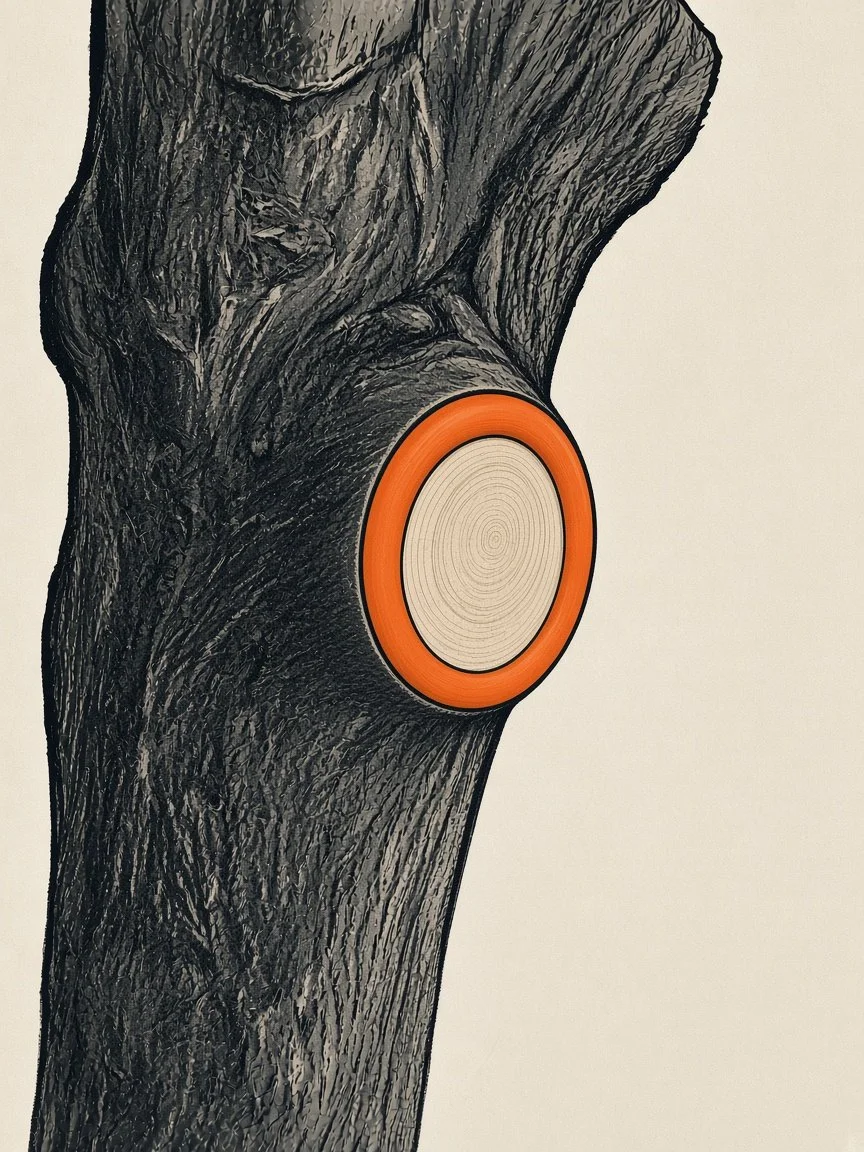
This cut is an example of a clean limb removal or thinning cut. The saw used was well kept and very sharp, keeping the cambium from tearing around the edges of the limb. This wound will have a better chance of concealing than a similar cut with a rough edge or poor angle. A limb like this is only removed if the majority of it is dead or actively dying, as was the case here.
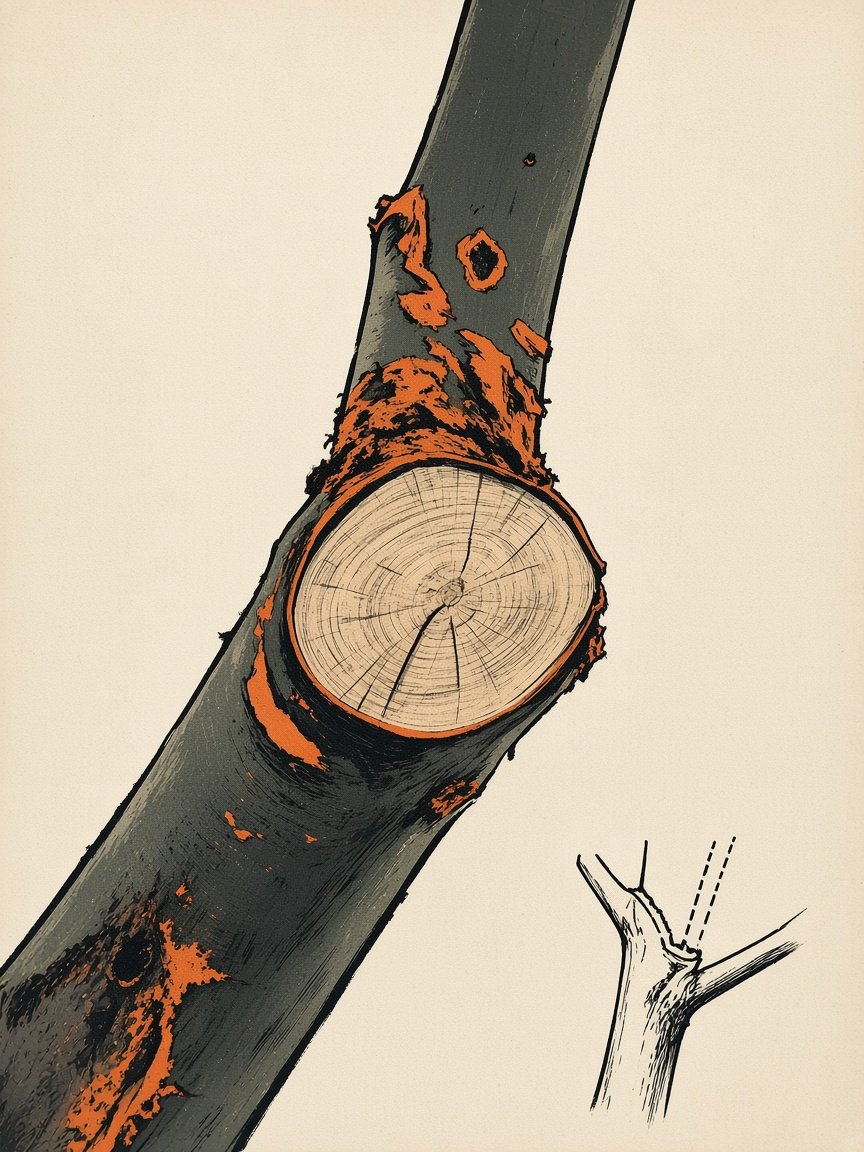
Palo verde (Parkinsonia sp.) with a large reduction cut on a main stem; the bark along the top edge of the cut is torn and ragged, and an older bark wound shows lower on the stem.
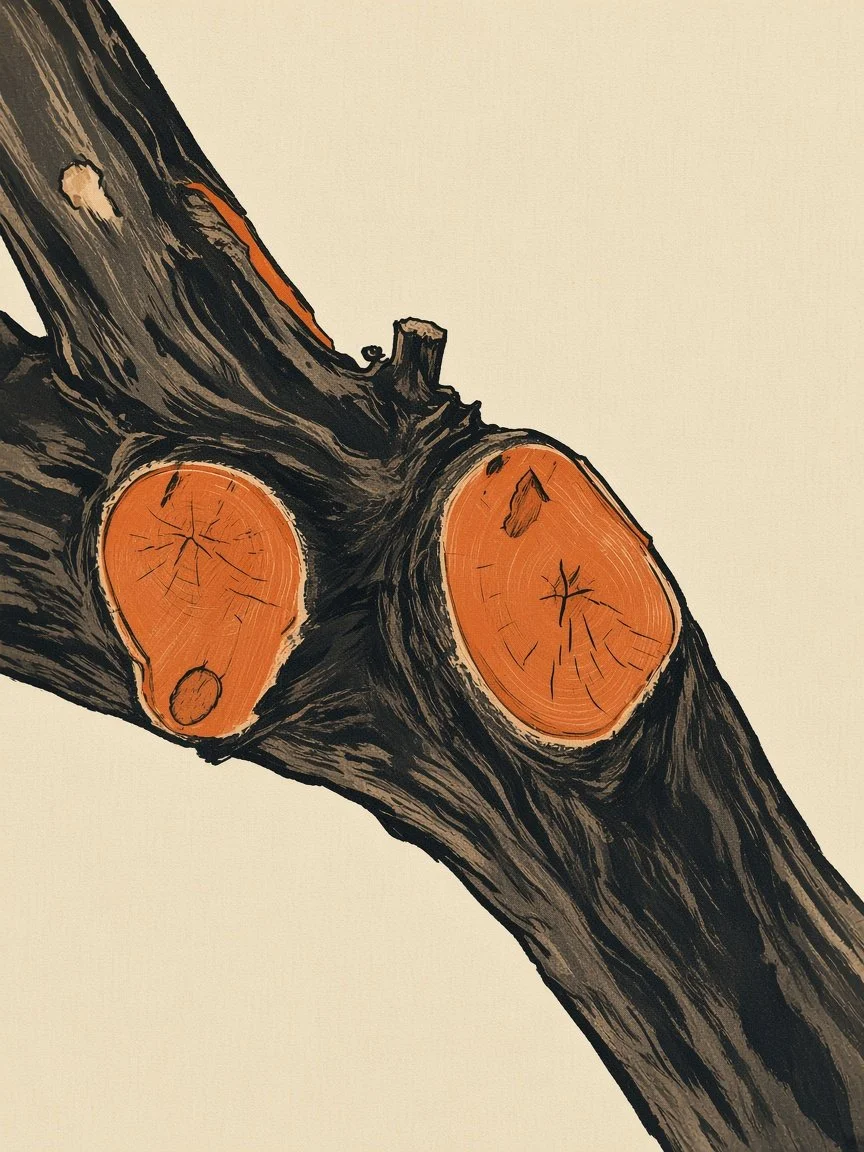
Two large cuts made side by side on the same limb (species not confirmed). Big wounds close together are slow to seal and can merge into one larger area of decay.
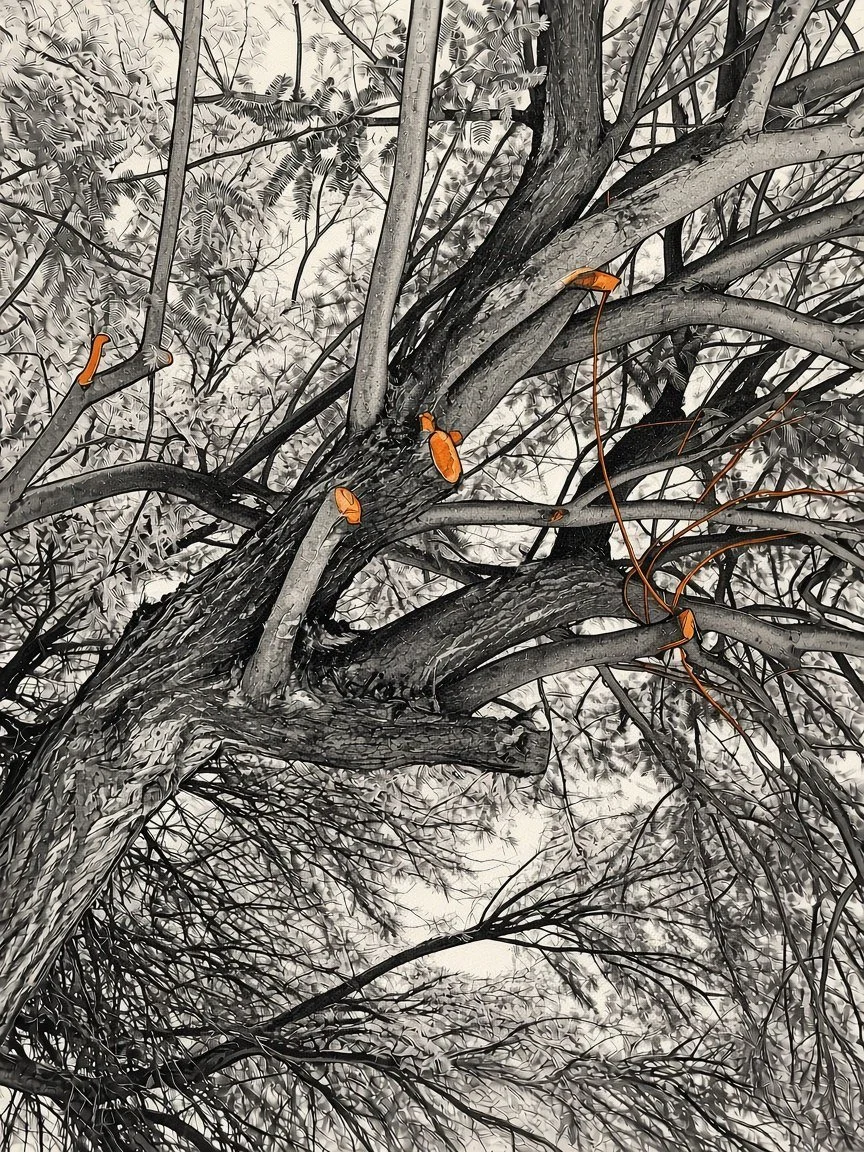
Mesquite (Prosopis sp.) canopy with several branch stubs left from earlier pruning or breakage.

Mesquite (Prosopis sp.) trunk with short stubs left from earlier cuts, now pushing clusters of sprouts; a tight bark seam runs between the two stems below.
