
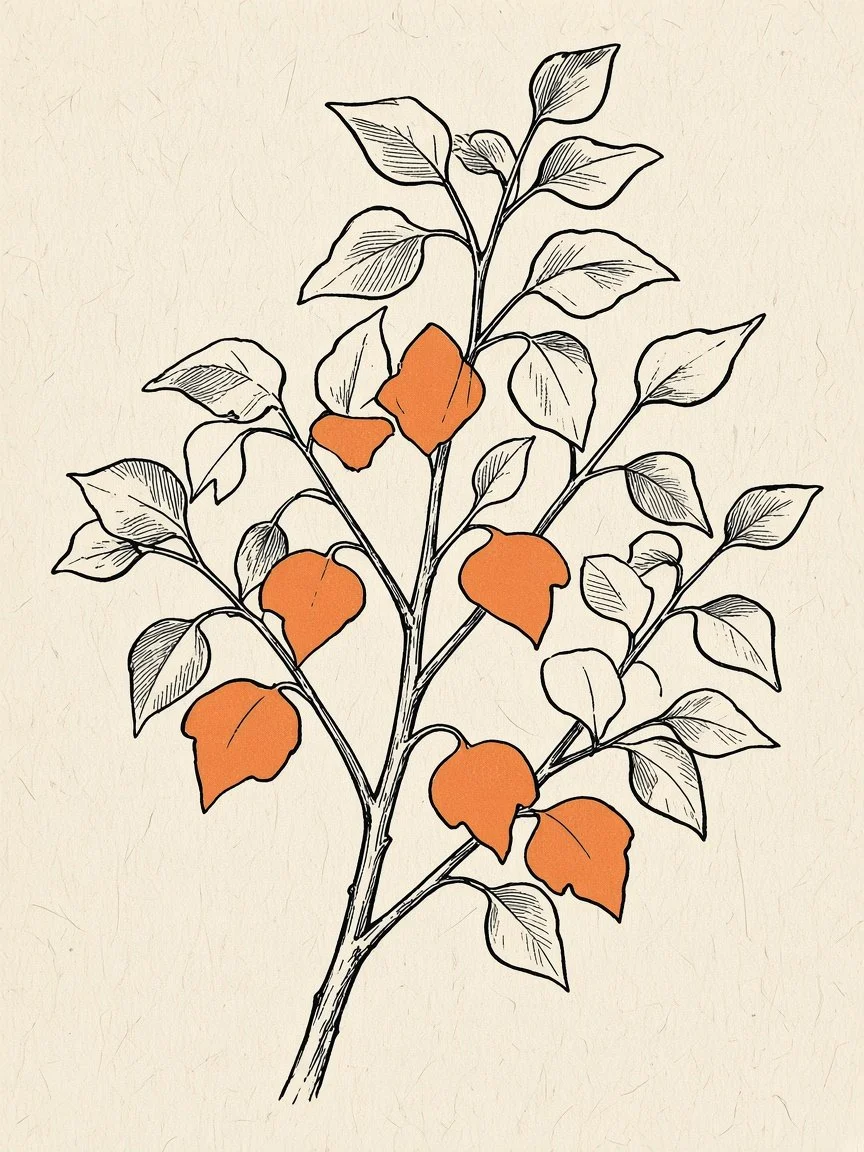
Young cottonwood (Populus): interior and older leaves turning yellow ahead of fall leaf drop, while the outer leaves are still green.
Summary
Yellow leaves in fall are usually not a sign of a sick tree. Deciduous trees like cottonwood, ash, mulberry, sycamore and fruit trees pull nutrients back out of their leaves and drop them before winter dormancy, and the interior, older leaves often go first. In southern Arizona, where many trees stay green through a long, warm fall, this normal process surprises a lot of homeowners. The key is knowing what normal looks like so real stress doesn't get missed.
Key symptoms
- Yellowing that starts on interior and older leaves, then spreads outward.
- Timing matches the season (fall into early winter for deciduous trees).
- Leaves turn evenly yellow, then drop cleanly.
- Buds at the twig tips are plump and healthy; twigs bend and are green under the bark.
- The tree had normal growth and leaf color through the summer.
Likely causes, ranked
- Normal seasonal senescence as the tree heads into dormancy. This is the most common reason for fall yellowing in deciduous trees.
- Shorter days and cooler nights triggering the change, sometimes earlier in a cool snap.
- Shading of interior leaves, which are shed first because they make the least food for the tree.
- Mild late-season water stress can speed up drop a little; worth a check, but not cause for alarm on its own.
Look-alikes and how to tell them apart
- Drought stress: leaves wilt, curl, brown and crisp (not just yellow), often in summer heat and at the top or outer canopy first.
- Chlorosis (nutrient deficiency): yellow between green veins on new leaves, in any season (see the Citrus Chlorosis guide).
- Leaf scorch and salt burn: brown, dead leaf edges and tips, not clean yellowing (see the Leaf Tip Burn guide).
- Branch dieback: bare, brittle twigs with no buds that don't leaf out in spring (see the Branch Dieback guide).
- Evergreens: many evergreens also shed older inner leaves periodically; the newest leaves stay green.
What to check on site
- Season and species: is this a deciduous tree at the time it normally drops leaves?
- Where yellowing starts: interior and older leaves (normal) versus new growth or tips (stress).
- Buds and twigs: plump buds and flexible, green twigs mean a healthy tree.
- Leaf condition: clean yellow (normal) versus brown edges, spots, wilting or crisping.
- Summer history: did the tree look healthy and grow normally this year?
- Watering: deep, regular water through fall, especially for water-loving trees like cottonwood.
Treatment
- No treatment is needed for normal seasonal leaf drop.
- Don't fertilize to "fix" fall yellowing; late-season fertilizer can push tender growth before cold weather.
- Keep watering deeply but less often as the weather cools, until the tree is dormant.
- Rake or mulch the leaves; fallen leaves can go into compost or be used as mulch under the tree.
- Call an arborist if yellowing happens out of season, starts on new growth, comes with brown or spotted leaves, wilting, dead twigs or bark problems, or if the tree doesn't leaf out normally in spring.
What to expect and how to monitor
- Leaves will continue to drop over the next few weeks until the tree is bare or nearly bare.
- In spring, look for a full, even leaf-out. That confirms the tree is healthy.
- If parts of the canopy fail to leaf out, that is the time for a closer inspection.
Worried about a tree? Text Justin, ISA Certified Arborist, at (520) 451-8790 or email Justin@TimberxTrees.com. TIMBERx serves Tucson, Oro Valley, Marana, Vail, Sahuarita, Green Valley and Benson.
