
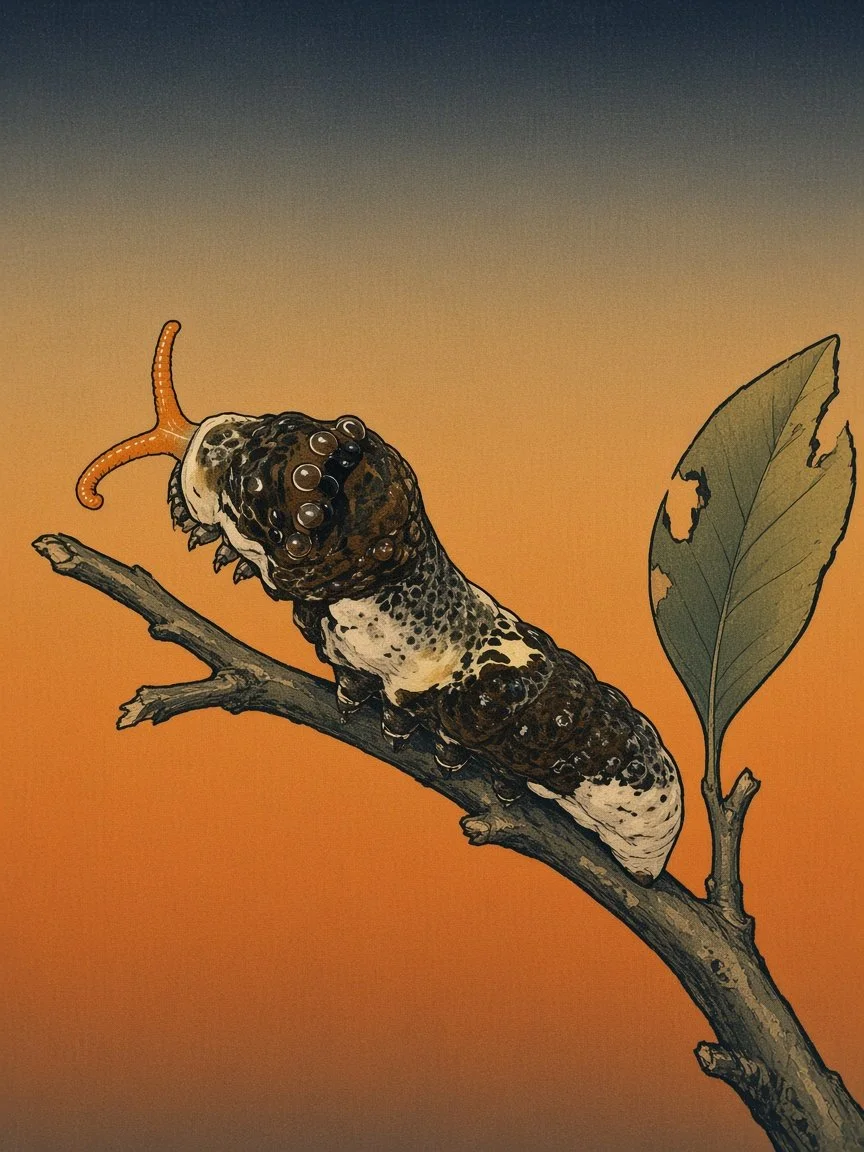
Giant swallowtail caterpillar (orange dog; Papilio cresphontes / P. rumiko, exact species not confirmed) found under a citrus tree, with its orange, forked scent horn (osmeterium) pushed out as a defense. The brown-and-cream coloring mimics a bird dropping.
Summary
The orange dog is the caterpillar of the giant swallowtail, the big black-and-yellow butterfly you see floating around Tucson citrus. Young caterpillars look like a fresh bird dropping, and when disturbed they push out a bright orange, forked scent horn that smells sharp and citrusy. They feed on citrus leaves, especially the tender new flush in spring and again after monsoon rains into fall. A few caterpillars on an established tree are a cosmetic issue; on a young, small citrus they can strip enough new growth to slow the tree down.
Key symptoms
- Chewed leaf edges and whole leaves missing on new flush, often down to the midrib.
- Brown, cream and olive caterpillars up to 2 inches long that look like a bird dropping, resting on the upper side of leaves or on twigs.
- An orange, Y-shaped horn that pops out from behind the head when the caterpillar is touched.
- Dark, pellet-like droppings (frass) on leaves below or on the ground under the tree.
- Bark-colored chrysalises hanging on twigs, walls or fences near the tree.
- Large black-and-yellow butterflies laying single round eggs on new leaf tips.
Likely causes, ranked
- Giant swallowtail egg-laying on citrus. Citrus is this butterfly's main host in town, so any backyard lemon, orange or grapefruit can host a few caterpillars.
- Heavy, tender new flush. Fertilizing and steady water push soft growth that the young caterpillars prefer, so lush young trees get more feeding.
- Spring and post-monsoon generations. Several generations a year in the Sonoran Desert mean caterpillars show up in waves, most often spring and late summer into fall.
Look-alikes and how to tell them apart
- Sphinx moth hornworms: green with diagonal side stripes and a stiff horn at the tail, not an orange horn behind the head (see the Sphinx Moth Caterpillars guide).
- Citrus leafminer: silvery winding trails inside the leaf, not chewed edges (see the Citrus Thrips & Leafminer guide).
- Grasshoppers and katydids: ragged chewing on leaves with no caterpillar or frass pellets; you'll often see the insect hop away.
- Leaf cutter bees: neat half-moon cutouts on leaf edges, not ragged feeding.
- Real bird droppings: wipe off; an orange dog moves and pushes out its horn.
What to check on site
- Size of the tree: young citrus with little leaf area is the main concern.
- How many caterpillars: walk the canopy and count, especially on new flush.
- How much of the new growth is gone: a few chewed leaves is normal; bare new shoots on a small tree is worth acting on.
- Eggs and chrysalises on nearby twigs, walls and fences, which tell you more are coming.
- Overall tree health: water depth, mulch and flush timing, so feeding isn't confused with stress leaf drop.
Treatment
- Usually no treatment is needed on established citrus. Many homeowners leave a few caterpillars to enjoy the butterflies.
- Hand-pick or relocate caterpillars on young trees. They don't sting or bite; the orange horn only makes a smell.
- Move them to an older citrus that can spare the leaves, if you want to raise butterflies.
- Bacillus thuringiensis (Bt kurstaki) sprayed on the new flush targets caterpillars only and is safe for bees, birds and people. Use it on young trees with heavy feeding, and follow the label.
- Avoid broad-spectrum insecticides. They kill the wasps and birds that keep orange dogs in check and can flare scale and mites.
- Protect young trees with lightweight netting over new flush during peak egg-laying if needed.
What to expect and how to monitor
- Established trees grow back the lost leaves on the next flush with no lasting harm.
- Birds, paper wasps and parasitic wasps take many caterpillars on their own.
- Check new flush every week or two in spring and after the monsoon, when new waves arrive.
- Call an arborist if a young tree keeps getting stripped, or if leaf loss continues after the caterpillars are gone, since that points to another problem.
Worried about a tree? Text Justin, ISA Certified Arborist, at (520) 451-8790 or email Justin@TimberxTrees.com. TIMBERx serves Tucson, Oro Valley, Marana, Vail, Sahuarita, Green Valley and Benson.
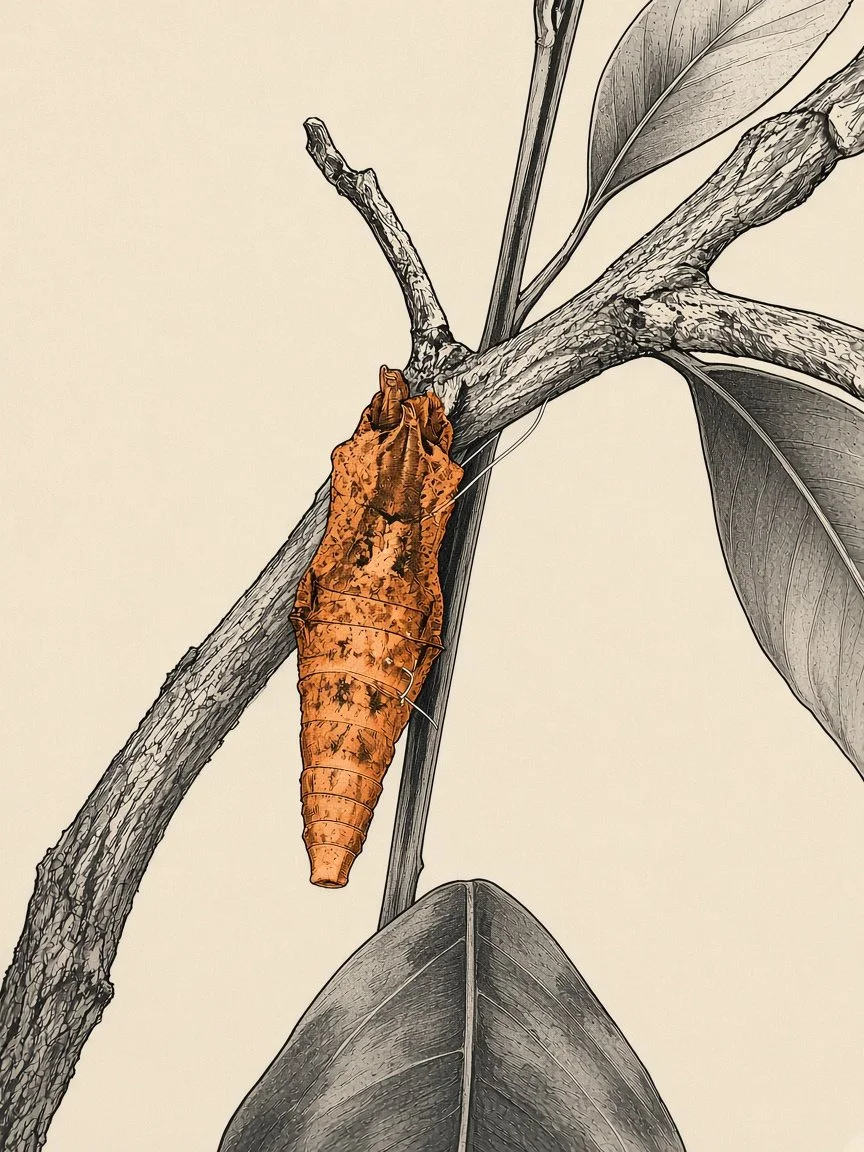
Giant swallowtail chrysalis hanging on a citrus twig, colored and textured to pass for a broken bark stub.
