
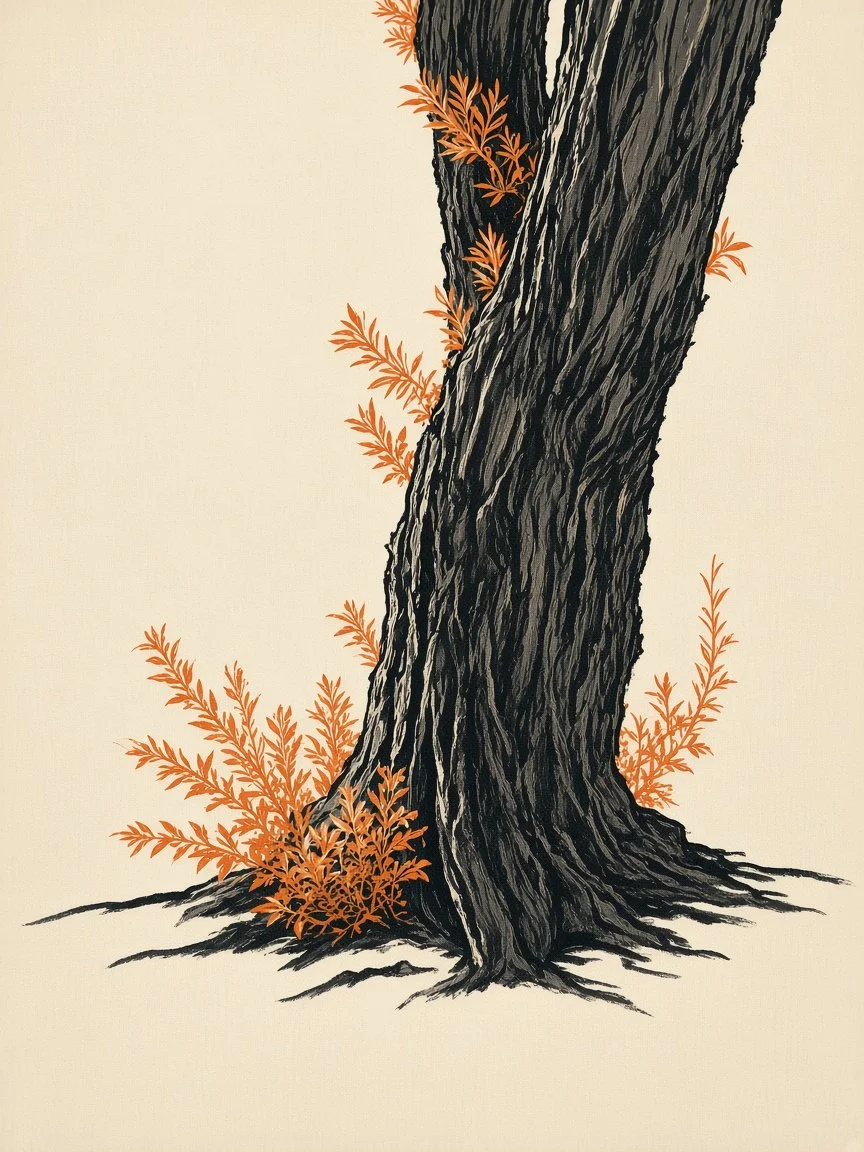
Mature shade tree in a front yard (species not confirmed from the photo), with a cluster of leafy sprouts growing from the base of the trunk.
Summary
Basal suckers are fast, upright shoots growing from the root flare, roots or lower trunk. A few are normal for some species, but a flush of them is often the tree reacting to stress: root damage, heavy pruning, drought, or decline in the main canopy. On grafted trees they can also be rootstock trying to take over. The sprouts themselves are easy to remove; the important part is finding out why they appeared.
Key symptoms
- Clusters of green, fast-growing shoots at the trunk base or coming up from roots near the trunk.
- Leaves on the sprouts may look different from the canopy (larger, different shape; on grafted citrus they are often thornier with three-part leaves).
- Sometimes paired with thinning or dieback in the upper canopy.
Likely causes, ranked
- Stress response. Drought, heat, root damage from trenching or compaction, or heavy pruning/topping pushes the tree to make new shoots from dormant buds low down.
- Species habit. Some trees (ash, elm, mulberry, olive, some acacias and mesquites, desert willow) sucker readily even when healthy.
- Rootstock growth on grafted trees. Citrus, stone fruit and many ornamental trees are grafted; shoots from below the graft are rootstock, not the variety you want.
- Decline or dieback in the main stem. When the top is failing, the tree regrows from the base.
Look-alikes and how to tell them apart
- Water sprouts: the same kind of vigorous shoot but growing up from branches in the canopy, usually after heavy pruning.
- Seedlings or weeds: come from seed, not from the tree; pull one and see if it is attached to a root.
- Multi-trunk form: an intentional, established stem, thicker and woody, not soft new growth.
What to check on site
- Where sprouts come from: above or below a graft union (look for a bulge or bark change near the base).
- Canopy health: dieback, thin areas, small leaves.
- Recent root disturbance: trenching, construction, grade changes, new hardscape.
- Watering depth and frequency; signs of drought stress.
- Trunk base for wounds, decay, or mower and string-trimmer damage.
Treatment
- Remove suckers by cutting them flush at their point of origin with clean, sharp pruners. Do not tear them off the trunk.
- Fix the underlying stress: correct watering (deep and infrequent, out at the drip line), stop string-trimmer damage, and avoid further root disturbance.
- Do not paint or seal cuts. Sprout inhibitor products exist for some species; follow the label exactly if used.
- On grafted trees, always remove anything coming from below the graft.
What to expect and how to monitor
- Suckers often return for a season or two; keep removing them while small.
- If sprouting increases along with canopy dieback, have the tree evaluated for root problems or decline.
Worried about a tree? Text Justin, ISA Certified Arborist, at (520) 451-8790 or email Justin@TimberxTrees.com. TIMBERx serves Tucson, Oro Valley, Marana, Vail, Sahuarita, Green Valley and Benson.
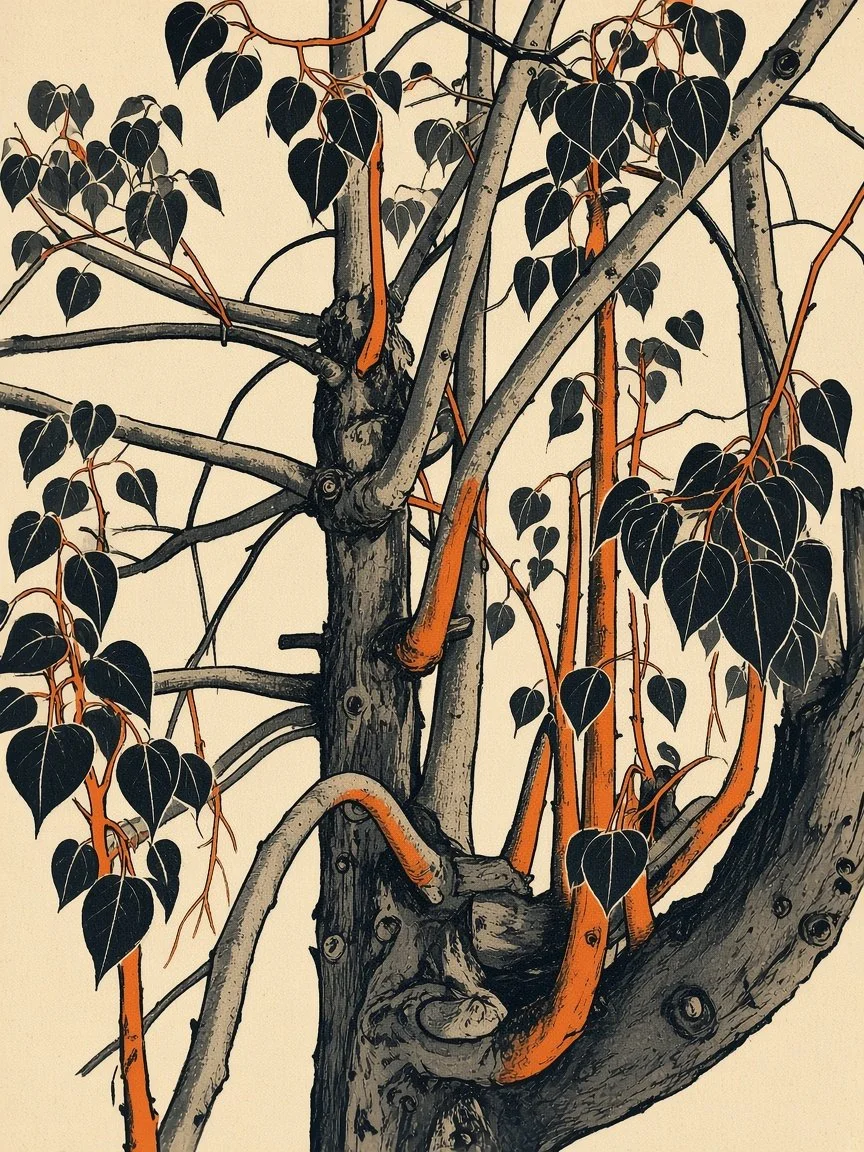
Queensland Bottle tree with a knobby trunk where old cuts were made, now covered with clusters of upright sprouts.
