

Young tree pulled for inspection (species not confirmed): a thick root wraps across the base of the trunk at the root flare, with circling roots from the nursery container.
Summary
Girdling roots grow around or across the trunk or main roots instead of outward. As both thicken, the girdling root squeezes the trunk or buttress roots and cuts off the flow of water and sugars. Most begin in nursery pots, where roots circle the container, and are planted that way. In Tucson's hard soils they are common, and they are a hidden cause of slow decline, dieback and trees that topple in storms.
Key symptoms
Roots visible circling the trunk or crossing over other roots at the soil line. A trunk that goes straight into the ground with no flare, or a flattened side at the base. Slow growth, small leaves, thin canopy, or dieback, often on one side. On young trees: roots still in the round shape of the pot years after planting.
Likely causes, ranked
Pot-bound nursery stock planted without correcting circling roots. Planting too deep (roots grow up and around the buried trunk; see Buried Root Flare guide). Hard or caliche soil and small planting holes that keep roots circling. Barriers like curbs, walls or rock that deflect roots around the trunk.
Look-alikes and how to tell them apart
Exposed surface roots: run outward from the trunk, not around it (see Exposed Surface Roots guide). Wire or tie girdling: caused by a manmade material, often higher on the trunk. Natural buttress roots: flare outward like the base of a column.
What to check on site
Pull back soil and mulch to find the root flare; a root collar excavation may be needed. Look for roots crossing or circling the trunk and buttress roots, and how deeply they are pressing in. Note any lean, one-sided dieback or a flattened base. On new plantings, check the root ball before planting.
Treatment
At planting: shave or cut circling roots on the outside of the root ball, tease roots outward, and set the flare at grade. On established trees: an arborist can cut and remove girdling roots, usually a few at a time so the tree is not set back too far. Large girdling roots need careful judgment. Correct planting depth by removing excess soil from over the flare. Follow up with deep, infrequent watering out at the drip line.
What to expect and how to monitor
Young trees recover well after roots are corrected; older trees respond more slowly. Re-check the root flare a year or two later for new circling roots. If decline continues or the tree leans, re-assess stability.
Worried about a tree? Text Justin, ISA Certified Arborist, at (520) 451-8790 or email Justin@TimberxTrees.com. TIMBERx serves Tucson, Oro Valley, Marana, Vail, Sahuarita, Green Valley and Benson.
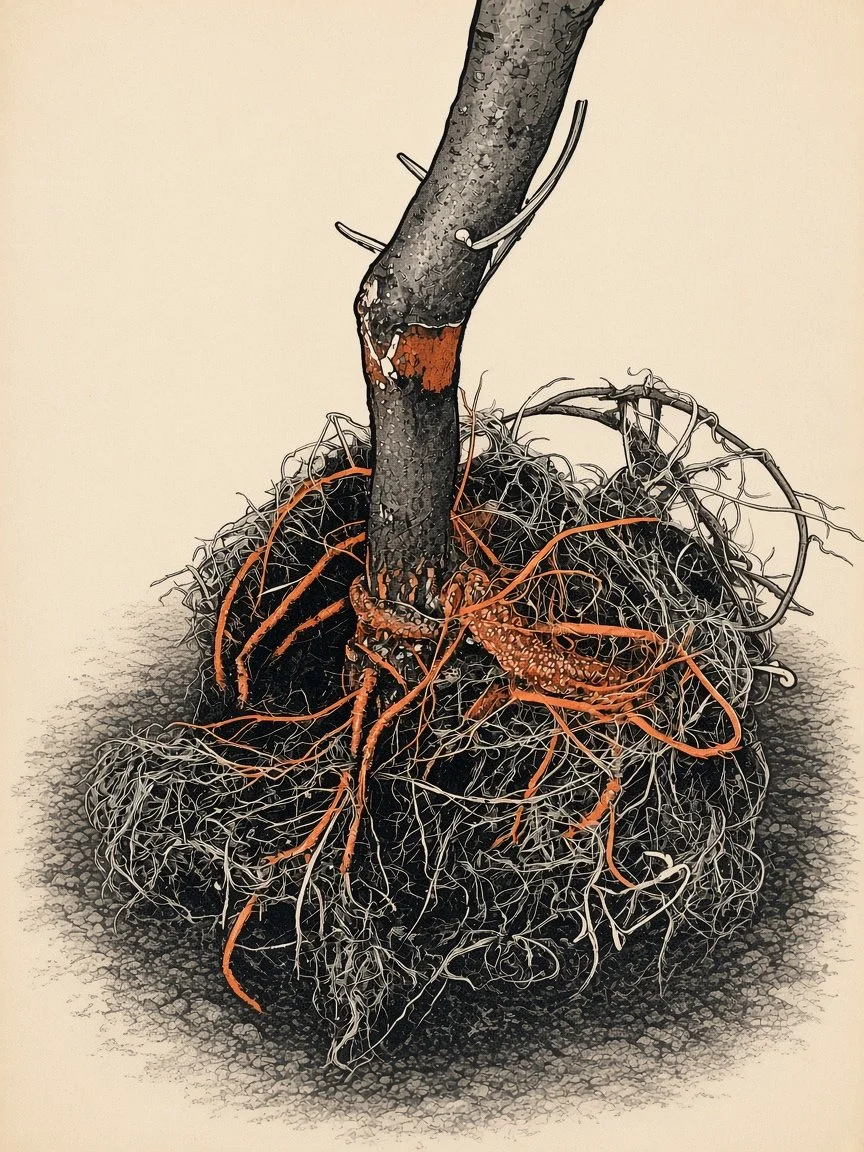
Root ball of a young tree with a dense mat of circling roots that kept the shape of its nursery pot.
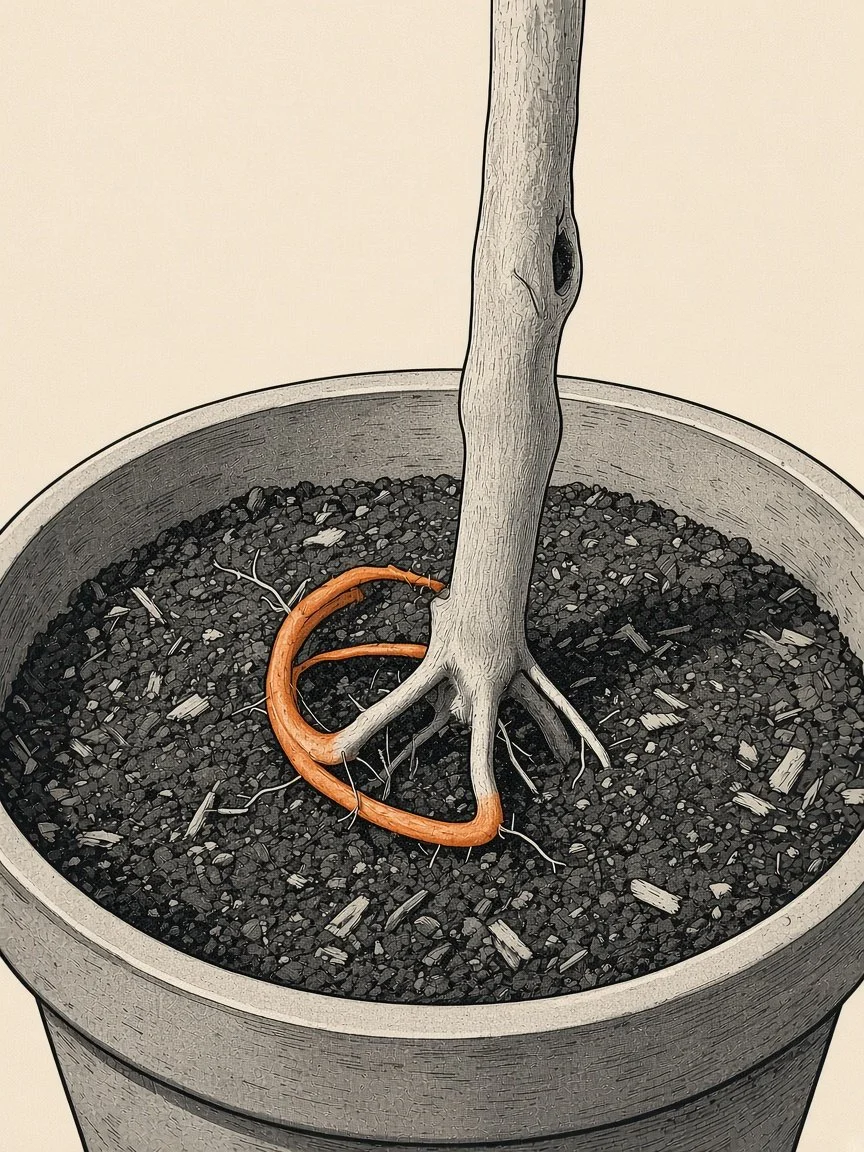
Container tree with a large root looping around the trunk at the surface.
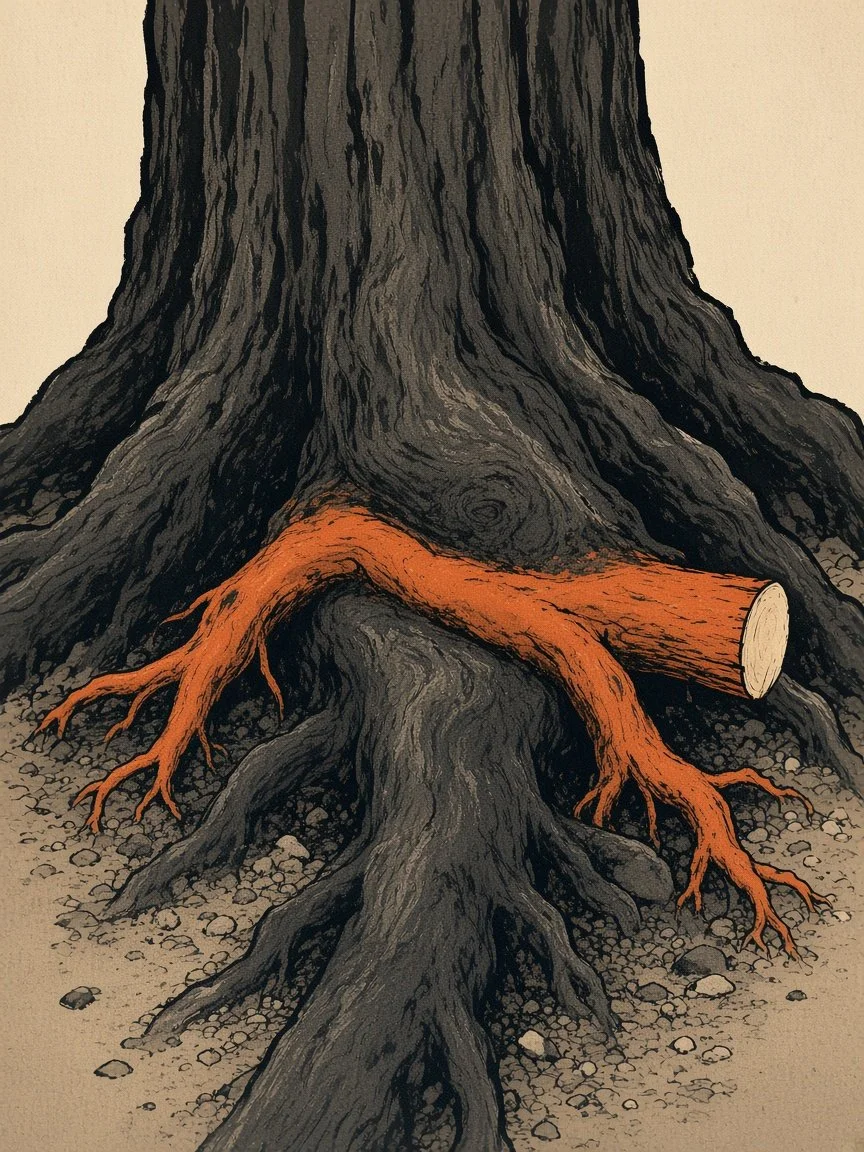
Root flare of a larger tree with a girdling root pressing across a buttress root; the girdling root has been cut.
