

Examples showcasing what the root flare looks like when buried. The main buttress roots which taper outward from the slender trunk are completely submerged in soil.
Summary
The root flare is where the trunk widens into the main roots, and it should sit at or just above the soil surface. When it is buried, from planting too deep or from soil, gravel or mulch piled up later, the trunk bark stays wet, decay can set in, and roots often grow around the trunk and girdle it. It is one of the most common hidden problems in landscape trees and one of the easiest to fix early.
Key symptoms
Trunk goes straight into the soil like a pole, with no visible flare. Soil, gravel or mulch piled against the trunk. A stain line, bark damage or soft bark at the old soil level when you dig. Slow growth, thin canopy or decline with no other obvious cause. Girdling roots found near the surface.
Likely causes, ranked
Planted too deep, often with nursery soil already over the flare in the pot. Soil or decomposed granite added over the root zone during landscaping. Mulch volcanoes piled against the trunk. Settling of the tree after planting in loose fill.
Look-alikes and how to tell them apart
Naturally narrow flare: some species have little flare; probe gently to find the first main root. Girdling roots: often found together with a buried flare (see Girdling & Circling Roots guide). Trunk wound or canker at the base: damage exists even with the flare at grade.
What to check on site
Probe or dig carefully at the base to locate the first main roots and the flare. Measure how deep the flare is buried. Check bark at the old soil level for decay or damage. Look for circling or girdling roots. Watering pattern: emitters against the trunk keep buried bark wet.
Treatment
Excavate the root collar: remove soil down to the flare by hand or with an air tool, without damaging bark or roots. Correct girdling roots found in the process. Leave the flare exposed with a shallow basin or a slope that drains away from the trunk. Keep mulch and gravel off the trunk, and move emitters away from the base. For new plantings, set the flare at or slightly above grade.
What to expect and how to monitor
Excavated bark dries and hardens over time. Watch for improved vigor over the next one to two seasons and check that soil isn't washed or raked back against the trunk.
Worried about a tree? Text Justin, ISA Certified Arborist, at (520) 451-8790 or email Justin@TimberxTrees.com. TIMBERx serves Tucson, Oro Valley, Marana, Vail, Sahuarita, Green Valley and Benson.
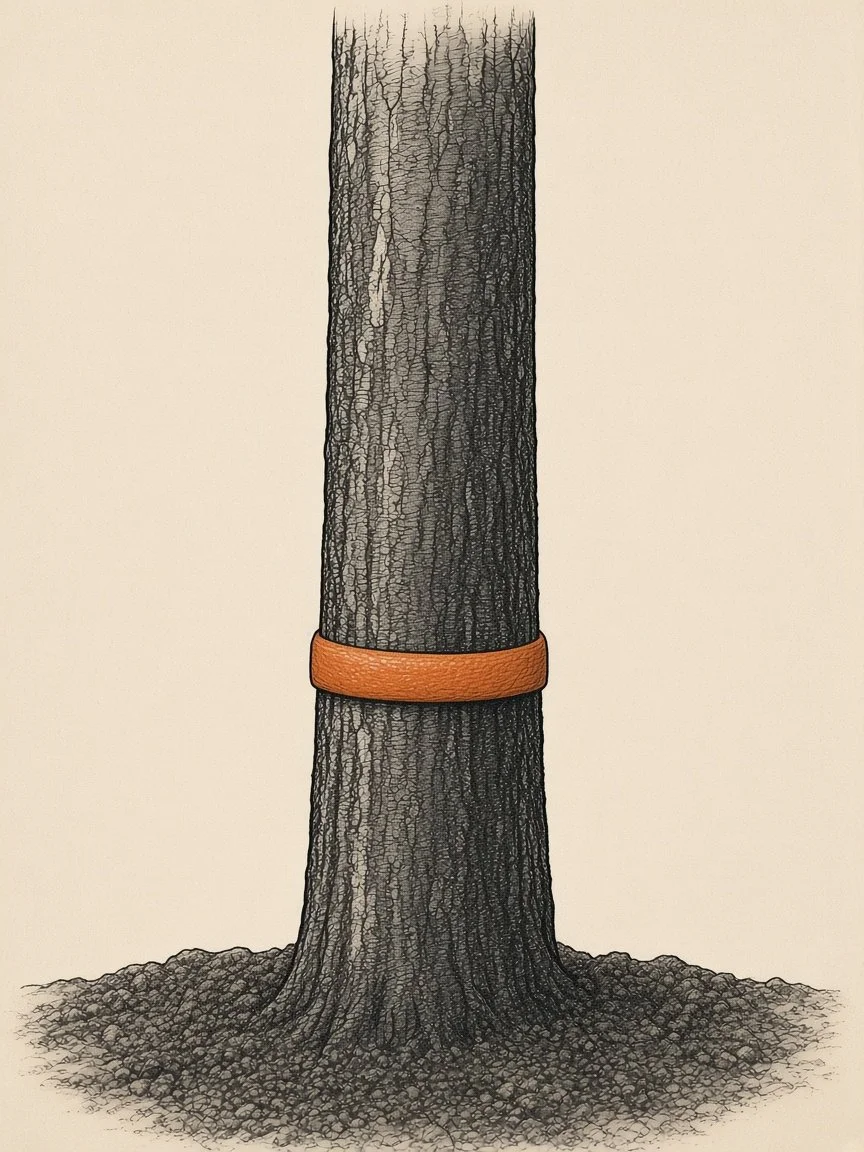
Root collar excavation on a larger tree, uncovering the flare and small roots that had grown in the buried soil. The marked area shows where slight trunk taper begins to become visible, this is the start of the “flare” we are looking for when we speak of a root flare. The buttress roots at the base of the tree comprise the remainder of the flair and should be slightly above the surrounding grade.
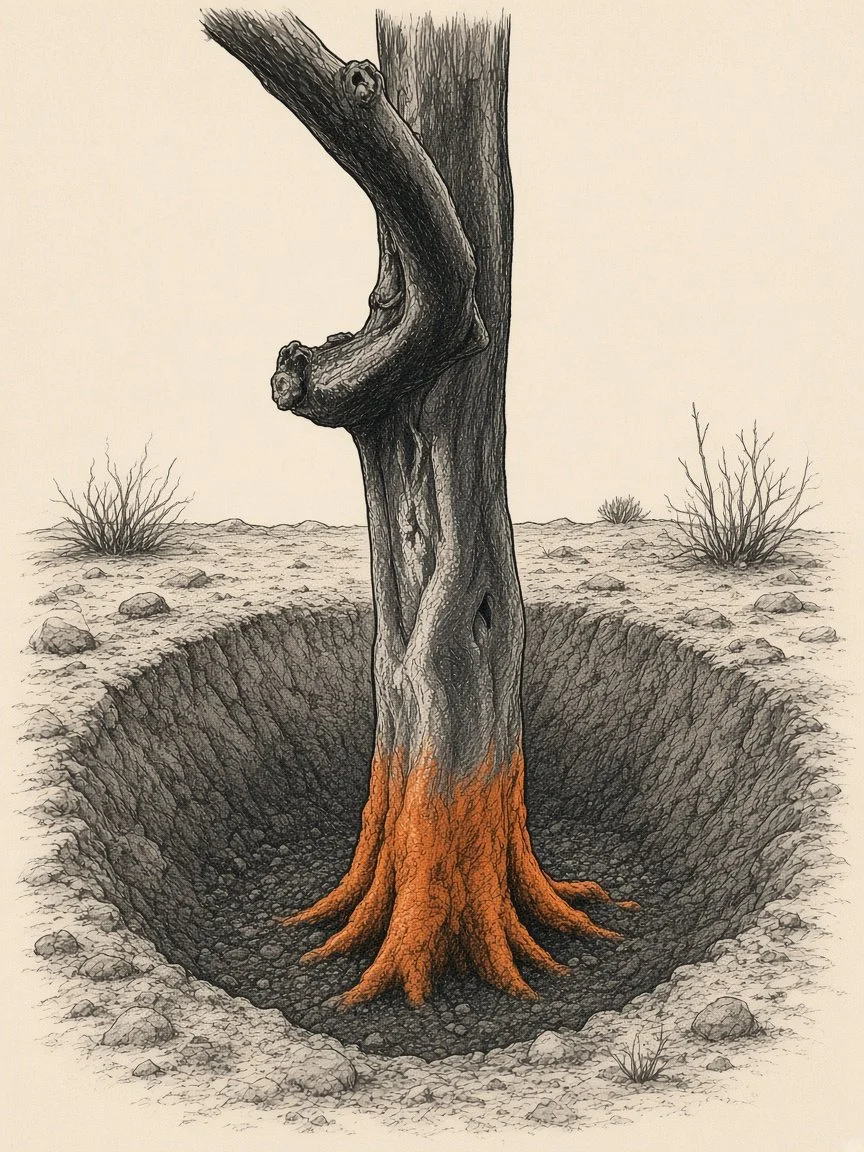
Same tree as the first photo (appears to be olive): soil dug out into a basin around the trunk to expose the buried flare, with discolored bark where soil sat against it. This is the end result of many root flare exposure procedures. It is not pretty, and becomes a challenge to maintain keeping water and debris from re-entering the basin. Planting the tree higher, would have prevented this type of work from being needed.
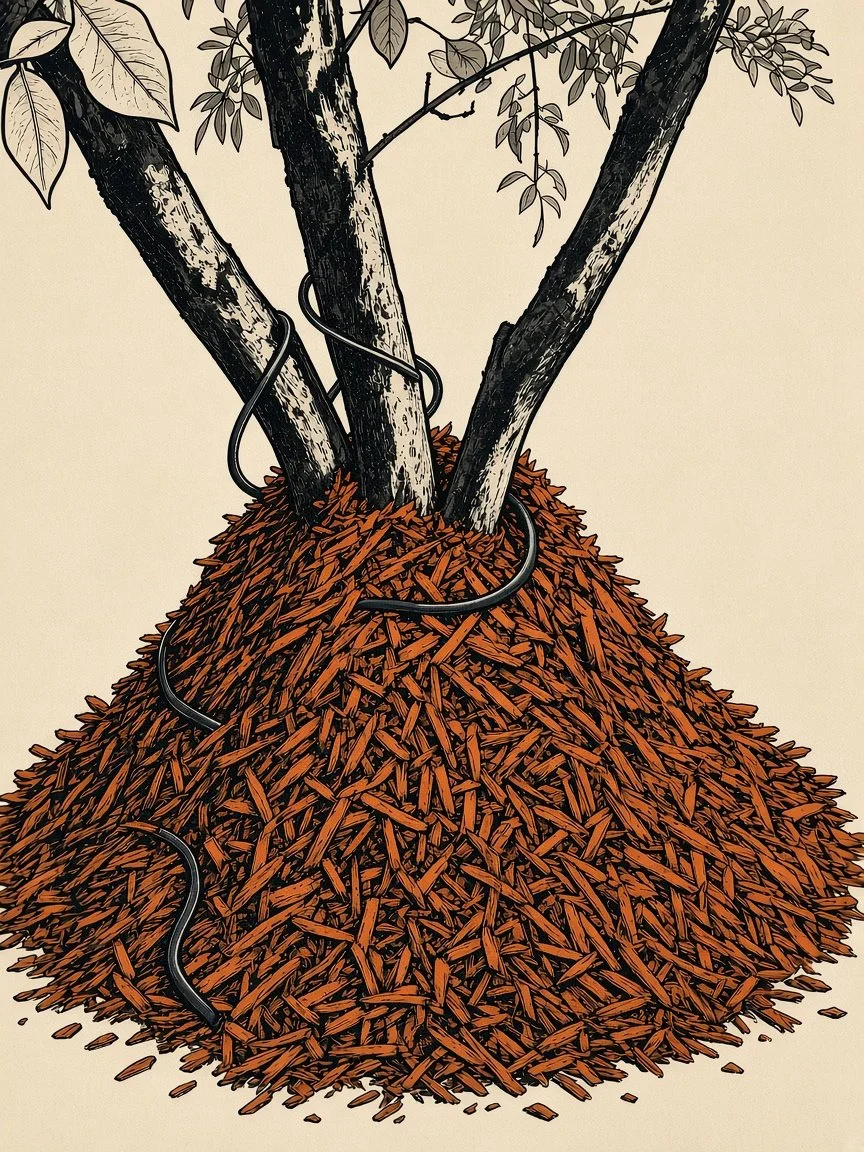
Multi-trunk tree (species not confirmed) with mulch and soil piled at the trunk base, no visible flare, and drip tubing running right against the trunk. This is a process known as volcano mulching, it is pretty common in other areas of the country, but we do occasionally see it here. Placing drip tubing directly on or against the trunk is common practice, and should be moved back as the tree ages.
