
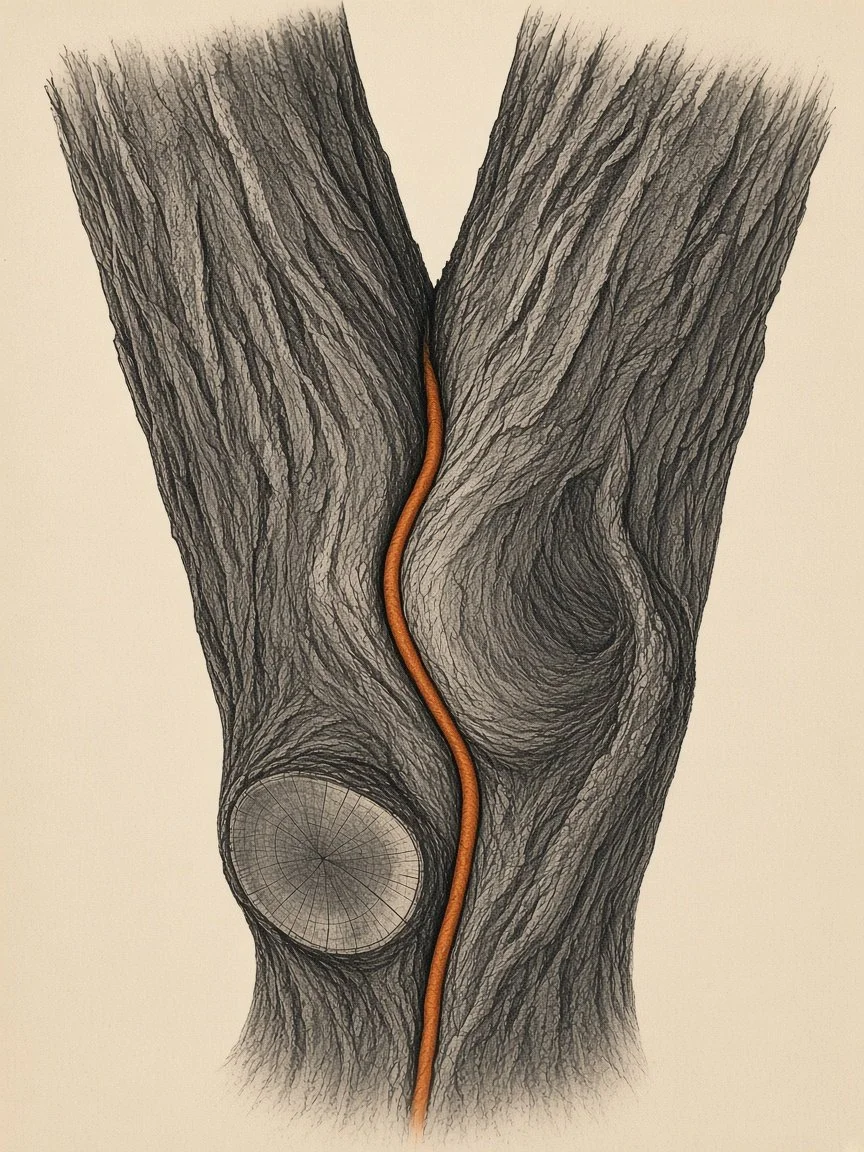
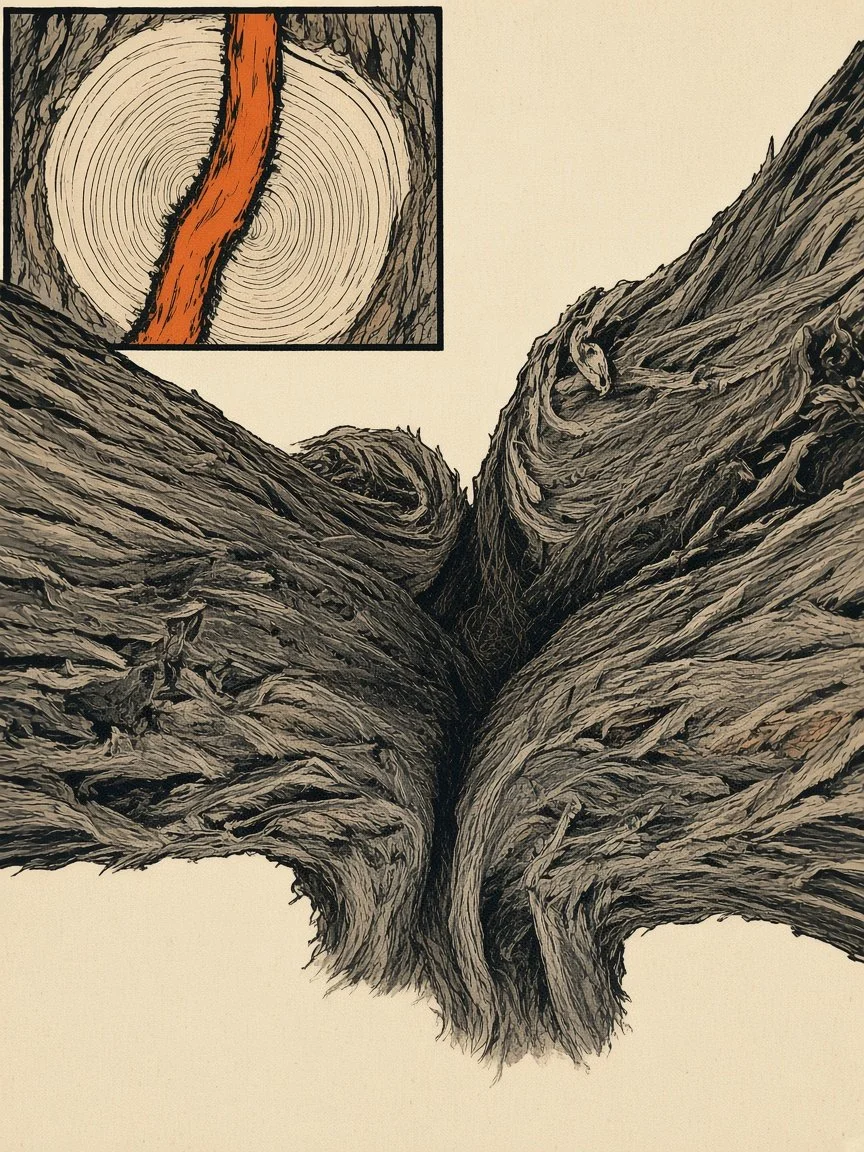
Mesquite (Prosopis sp.): two trunks of nearly equal size meeting in a tight V at the base, with bark pinched into the seam between them.
Summary
Codominant stems are two or more trunks or leaders of similar size growing from the same point. When they meet in a tight V, bark gets trapped between them (included bark) instead of forming a strong wood union. These unions are weaker than a normal branch attachment and are one of the most common reasons multi-trunk desert trees like mesquite split during monsoon winds. The defect is structural, so management is about reducing load and monitoring rather than curing.
Key symptoms
- Two or more stems of similar diameter originating at the same point.
- A narrow, V-shaped crotch rather than a wide U.
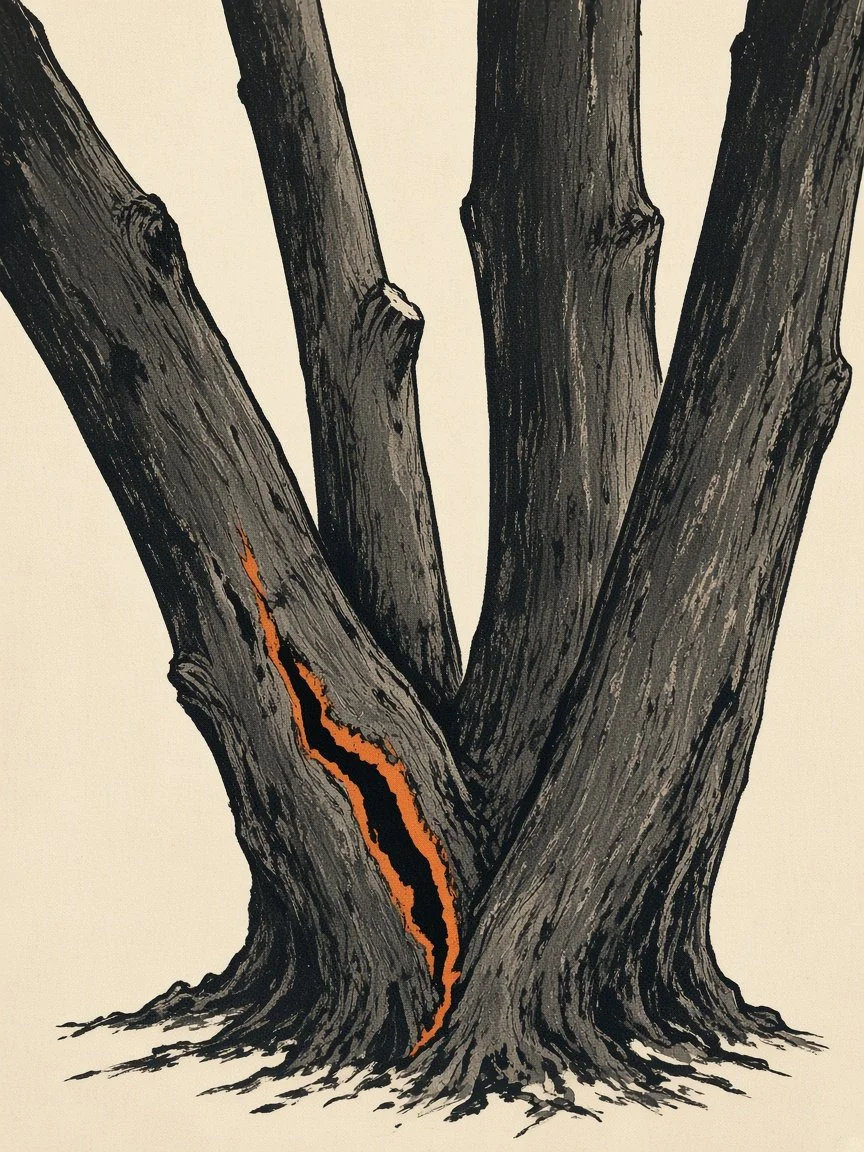
- A seam or crease of bark running down into the union, sometimes with swollen "ears" of wood on either side.
- In advanced cases: a crack, oozing, or decay at the bottom of the seam.
Likely causes, ranked
- Natural growth habit. Mesquite, palo verde, acacia and many desert trees naturally grow multi-trunk.
- No structural pruning when young. Without early training to one dominant leader or well-spaced stems, equal stems compete and squeeze together.
- Topping or heavy heading cuts. These create clusters of competing upright stems that form weak unions later.
Look-alikes and how to tell them apart
- Strong multi-trunk union: stems meet in a wide U with a raised branch bark ridge pushed up between them, not trapped bark.
- Crack or split union: an active, open crack is no longer just a defect; it is a failure in progress and needs urgent attention.
- Trunk cavity: an open hole into the wood, not a bark-filled seam (see the Trunk Wound & Open Cavity guide).
What to check on site
- Angle and depth of the union; how much bark is included.
- Cracks, fresh splits, oozing, fungal growth or hollow sound at the union (tap with a mallet).
- Size and weight of each stem, lean, and how far each extends over targets (house, wall, street, parking).
- Recent wind damage or broken limbs elsewhere in the tree.
- Root zone condition; a weak union plus weak roots raises risk.
Treatment
- Structural pruning: reduce the length and weight of one or more stems (subordination) so loads at the union drop. Thin the canopy moderately so wind passes through. Avoid lion-tailing and topping.
- Cabling: for high-value trees with significant included bark, a professionally installed dynamic or static cable between stems can limit movement. It needs periodic inspection.
- Remove a stem while it is still small, on young trees, to correct the structure early.
- Removal: if a union is cracked and the tree has a significant target, removal may be the safe choice.
- Prune desert legumes like mesquite outside the peak summer heat where possible and do not overthin.
What to expect and how to monitor
- Included bark does not heal; the goal is lowering the chance of failure.
- Inspect before each monsoon season and after major storms. Any new crack at the union means reassess right away.
Worried about a tree? Text Justin, ISA Certified Arborist, at (520) 451-8790 or email Justin@TimberxTrees.com. TIMBERx serves Tucson, Oro Valley, Marana, Vail, Sahuarita, Green Valley and Benson.
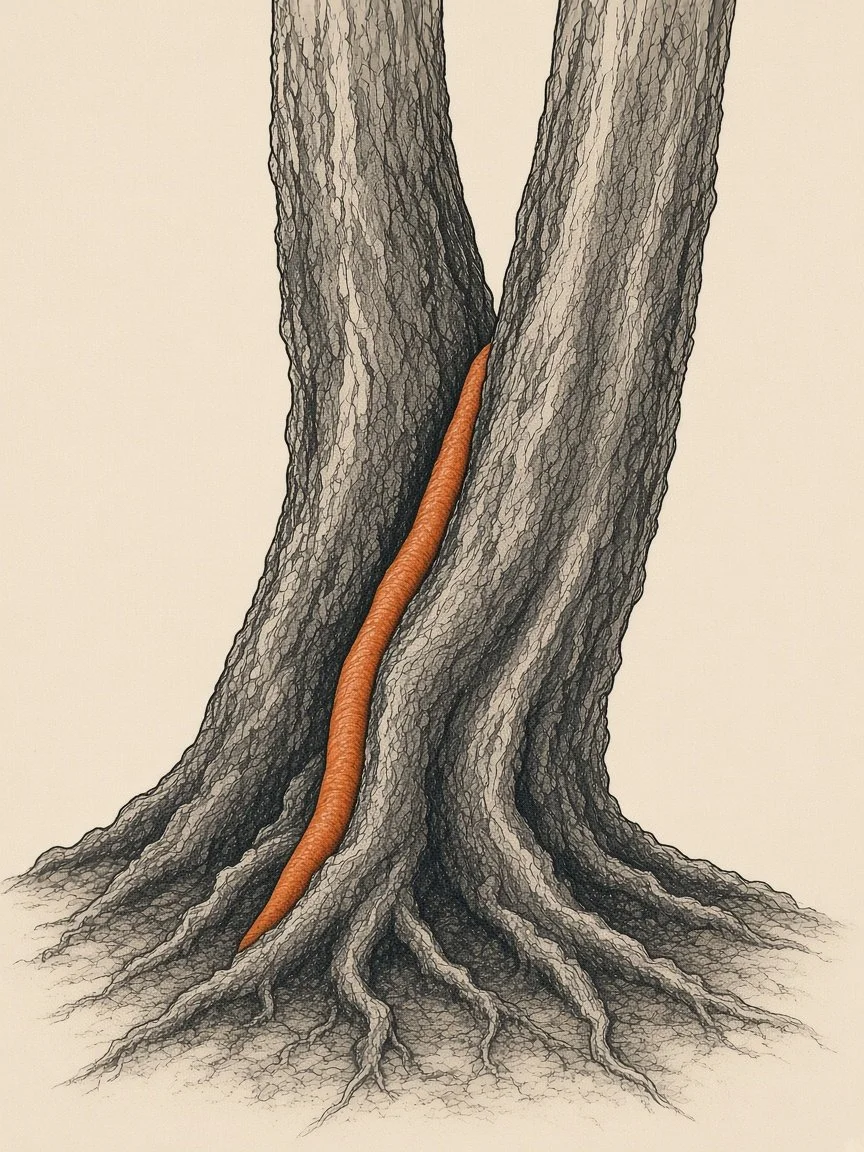
Second example (species not confirmed): two stems pressed together in a tight union, with a bark-lined seam and an open gap at the base of the crease.
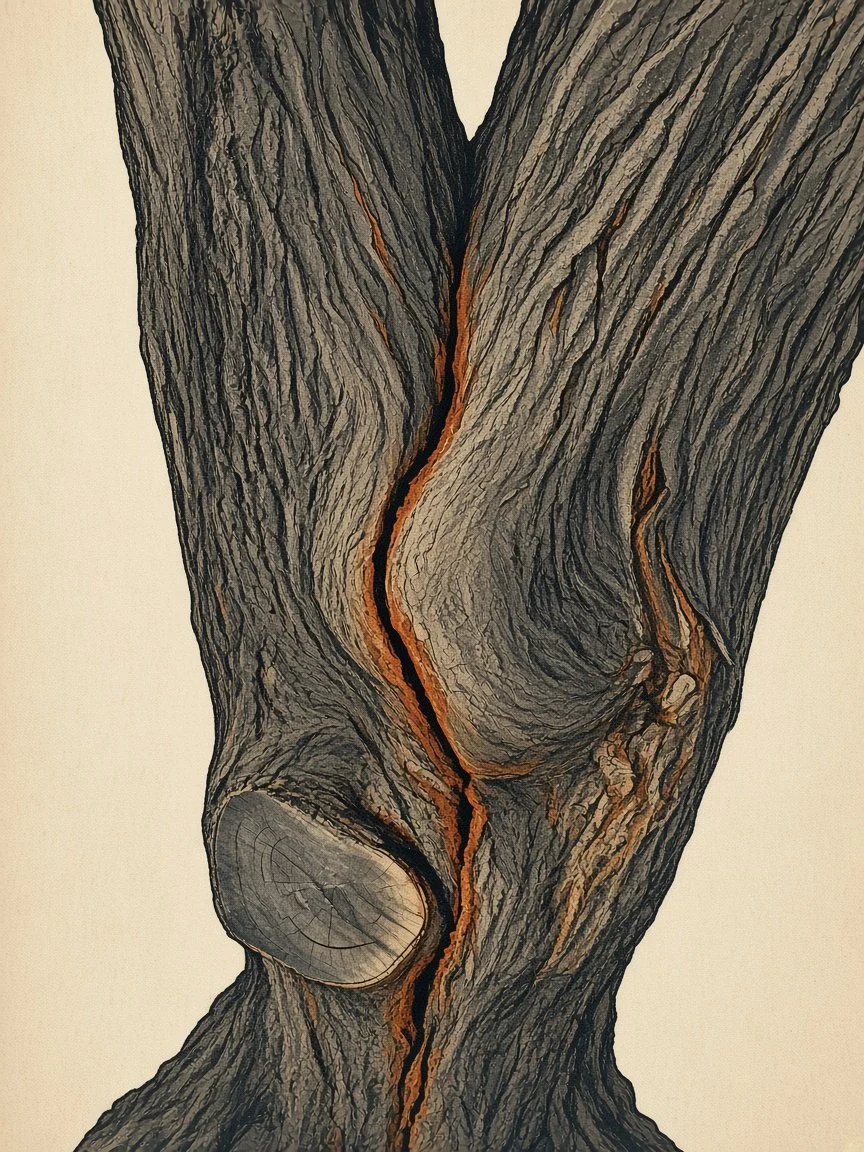
Trunk (species not confirmed; same kind of tree as the previous example) where two stems have grown together in a tight union; a long bark-lined seam runs down from the crotch, with an old branch cut just below.
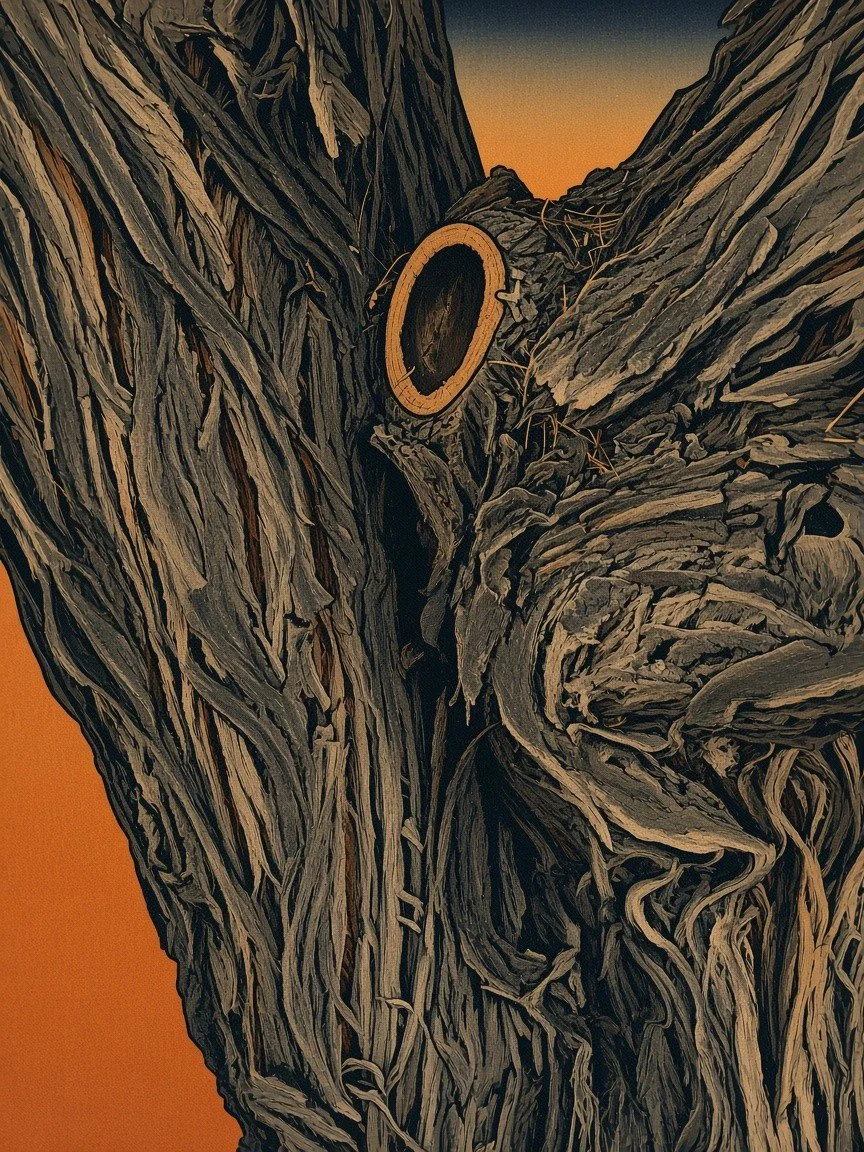
Mesquite (Prosopis sp.) with two trunks joined in a tight union; a bark-filled seam runs down from the crotch below an old branch stub.
Multi-stem landscape tree (species not confirmed) with three stems forming from one point at the soil line and pressed tightly together; the bark is damaged where stems meet.
The same multi-stem tree from another angle: tight stem unions at ground level, a stub cut on one stem, and a thin stem crowded between larger ones.
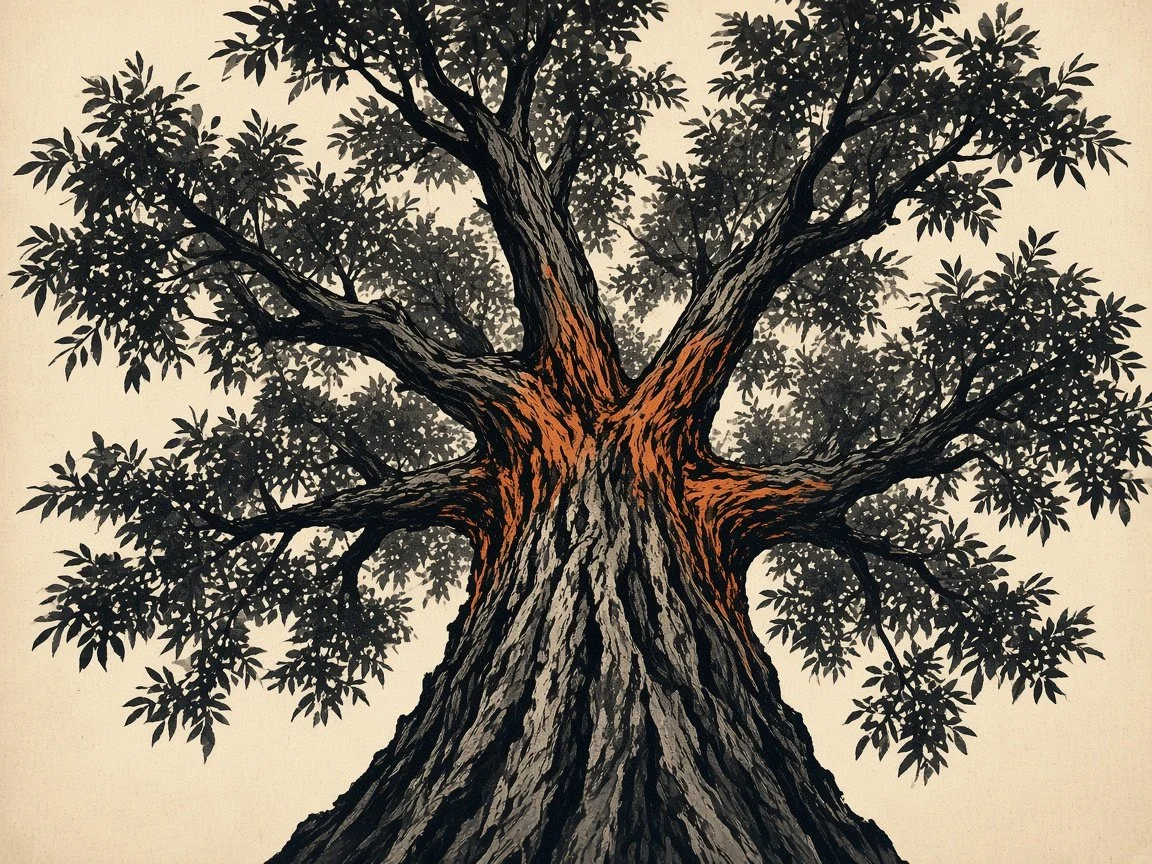
Ash Tree (Fraxinus sp.) with five large scaffold limbs all growing from nearly the same point on the trunk.

Young fruit tree (species not confirmed; photographed in winter outside Arizona) with colored lines marking two upright leaders growing side by side from the same point, the kind of tight union that is easiest to correct while the tree is young.
