
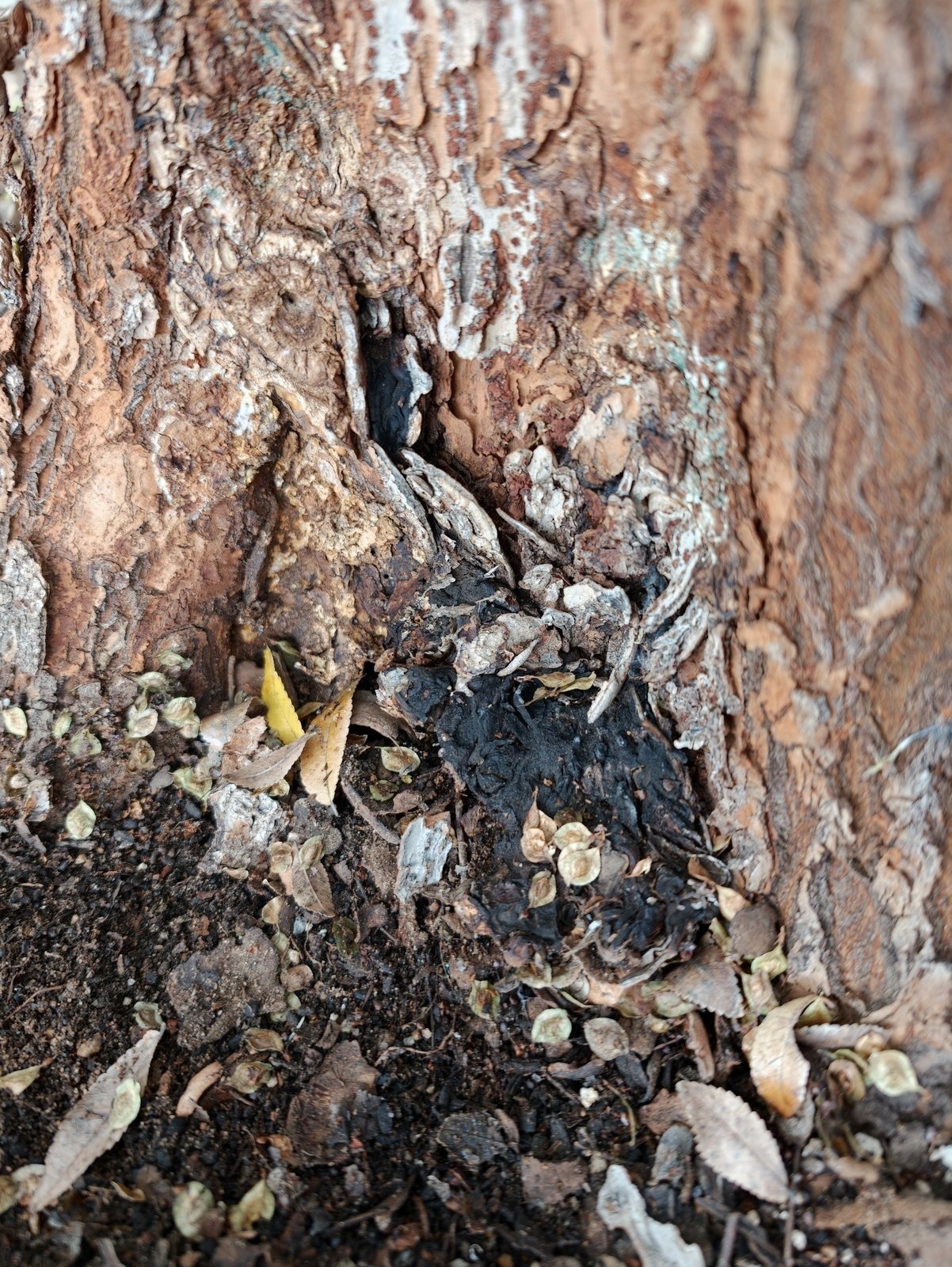
Decay pocket at the base of an elm, with a dark bracket- or crust-like fungus growing in it.
Summary
A rot pocket is a recess of decayed wood. When a bracket or crust-like fungus is growing in that pocket, decay is already established inside the tree. The fruiting body is just the part you can see. The fungus itself is growing in the wood. A fruiting body that has been there about a year means internal decay has been underway for some time.
This pocket is at the base of an elm. There was no old wound at that spot. The tree has been topped in the past. Topping stresses a tree. It leaves large wounds and weakly attached regrowth, and it can weaken the tree's ability to wall off decay.
At the trunk base, that matters for strength. Basal decay can reduce how much sound wood is left in the lower trunk and how well the tree is anchored. This is the same family of problems described in the Wood Decay Fungi at Old Wounds guide, focused here on a rot pocket at the flare.
Key symptoms
- A recessed, decayed pocket in the trunk, in this case at the base of an elm.
- A fungal fruiting body in or at the edge of the pocket, in this case a dark, bracket- or crust-like growth that has been there about a year.
- Loose, cracked, or missing bark around the pocket.
- Soft, punky, or crumbly wood in the pocket.
- Sometimes a hollow sound when the lower trunk is tapped.
Likely causes, ranked
- Wood-decay fungus already in the tree, now fruiting at the pocket. A fruiting body present for about a year means decay in the wood has been underway for some time.
- Persistent moisture at the root flare from soil, mulch, or irrigation against the trunk.
- Past topping, which stresses a tree, leaves large wounds and weakly attached regrowth, and can make it harder for the tree to wall off decay.
Look-alikes and how to tell them apart
- Lichens or surface stains: flat growths on bark, not a thick fruiting body sitting in a cavity.
- Sap flow or slime flux: wet, oozing streaks, not a solid fungus.
- Mushrooms in mulch or soil: growing from the ground away from the wood, usually not from the trunk itself.
- Other wound symptoms without a fruiting body still deserve a look; the fungus makes the decay easier to see (see the Wood Decay Fungi at Old Wounds guide).
What to check on site
- Where the pocket and fruiting body sit. Decay at the base and root flare is more serious than the same thing on a small limb.
- How much sound wood remains: probe gently, and look for cavities, cracks, and lean.
- What stands in reach of the tree if it were to fail.
- Whether mulch, soil, or emitters are piled against the flare, keeping the pocket wet.
- Whether a formal risk assessment is warranted.
Treatment
- There is no spray or dressing that cures decay already inside the wood.
- Do not fill, seal, or carve out the pocket.
- Move moisture off the flare: pull soil and mulch back so the trunk flare is visible and dry, and keep emitters off the trunk.
- Avoid new large wounds. Prune only what is necessary, with proper cuts.
- A tree with significant basal decay near a house or walkway should be assessed for risk. In some cases, reduction or removal is the safe choice.
What to expect and how to monitor
- Fruiting bodies may come and go with the season; the decay in the wood continues.
- Re-inspect at least once a year and after storms, watching for new cracks, lean, or a larger pocket.
When to call TIMBERx
Call an arborist when you see a fungus or a rot pocket at the base of a tree, especially near a house, wall, or walkway.
