
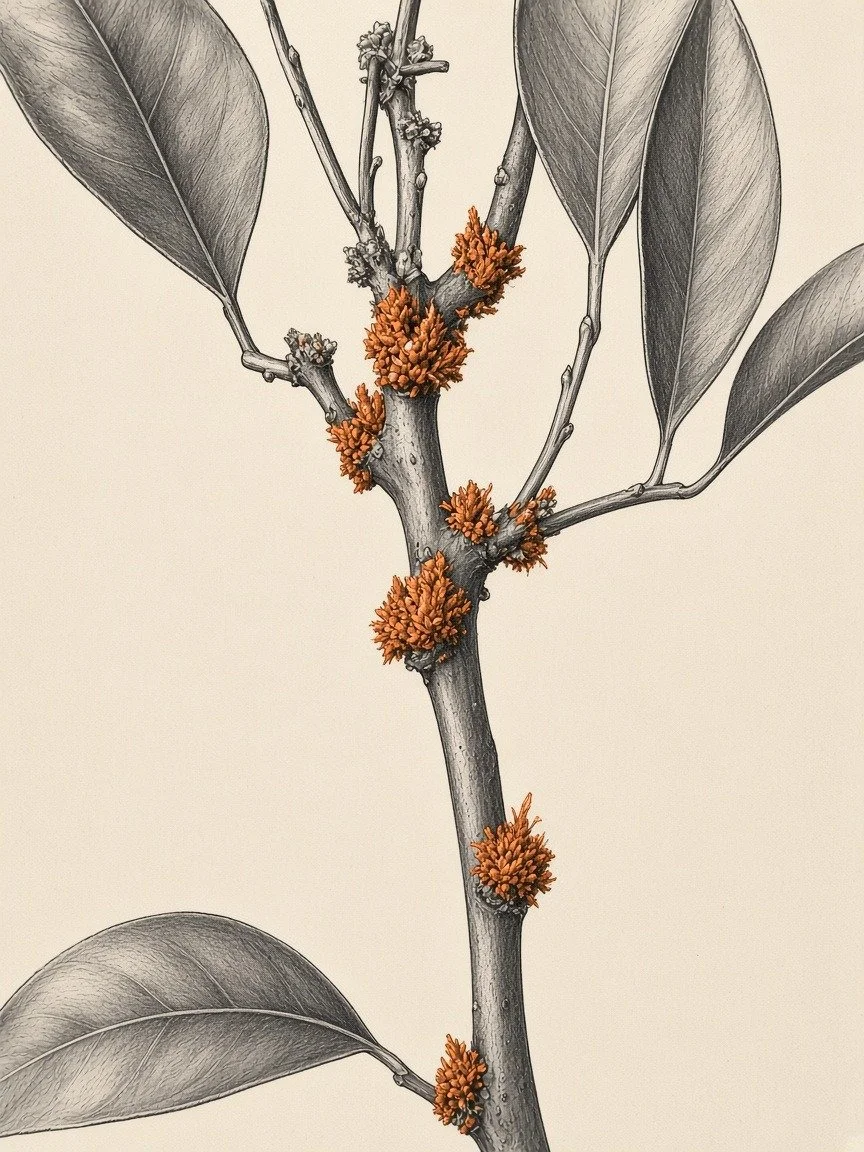
Citrus stem with suspected witches’ broom: tight clusters of short, crowded shoots packed at the nodes.
Summary
Witches' broom is a pattern of growth, not a single diagnosis. It is many short, crowded shoots packed at one point, often on a swollen node, instead of a normal branch. This citrus shows that pattern clearly, so it is suspected witches' broom. Lab testing is the way to confirm the cause.
Herbicide drift can cause a similar broom on other trees (see the Herbicide Damage - Witches' Broom Growth guide). That is not the cause at this site. Herbicide use near these trees is not a factor here.
Key symptoms
- Tight clusters of many short shoots at the nodes, instead of a few normal laterals.
- Nodes that look swollen or knobby where the clusters sit.
- Some clusters still green and growing; others dried or browned.
- Nearby leaves may still look like ordinary citrus leaves.
- The pattern repeating at several nodes along the same stem.
Likely causes, ranked
- A pest or disease that causes shoot proliferation. Mites and some pathogens can trigger many short shoots at one point. Lab testing is the way to confirm the cause.
- Repeated injury or heading of the buds, which can produce a tight cluster of weak shoots from one node.
Look-alikes and how to tell them apart
- Herbicide damage: can also produce witches' broom, often on a whole flush of new growth at once (see the Herbicide Damage - Witches' Broom Growth guide). That is not what is happening at this site.
- Scale or other insects sitting on the stem: insects rest on the bark; they are not a tuft of tiny shoots growing out of the node.
- Normal citrus fruiting wood or short spurs: a few short laterals, not a packed cluster of many shoots at a swollen node.
- Freeze damage: dead tips after a cold night, without crowded new shoots at the nodes.
What to check on site
- How many stems show the clusters, and whether new growth elsewhere on the tree is normal.
- Whether the same pattern is spreading to new shoots.
- Recent pruning, heading cuts, or bud injury on the affected wood.
- Lab testing when you want the cause confirmed, so treatment can be chosen on that result.
Treatment
- Lab testing is the way to confirm the cause. That is the most useful next step before choosing a spray or a heavy prune.
- Do not treat this as herbicide damage. That cause is already ruled out here, and the usual herbicide advice does not apply to this tree.
- Do not spray at random while the cause is still unconfirmed.
- An arborist can help decide whether to prune affected shoots, and how much to take, once the testing and the rest of the canopy have been considered.
- Make any cuts at the collar or at a normal lateral. Do not heading-cut a whole section of the canopy as a shortcut.
What to expect and how to monitor
- Watch each new flush: normal shoots and leaves are a good sign; new packed clusters mean the pattern is still active.
- Recheck the rest of the tree, not only the stems already photographed.
- Once a lab result is in, treatment and pruning can be matched to that cause.
When to call TIMBERx
Call an arborist if you see packed, short shoots clustered at the nodes of a citrus tree. We can help you get the cause confirmed and decide what to prune or leave.
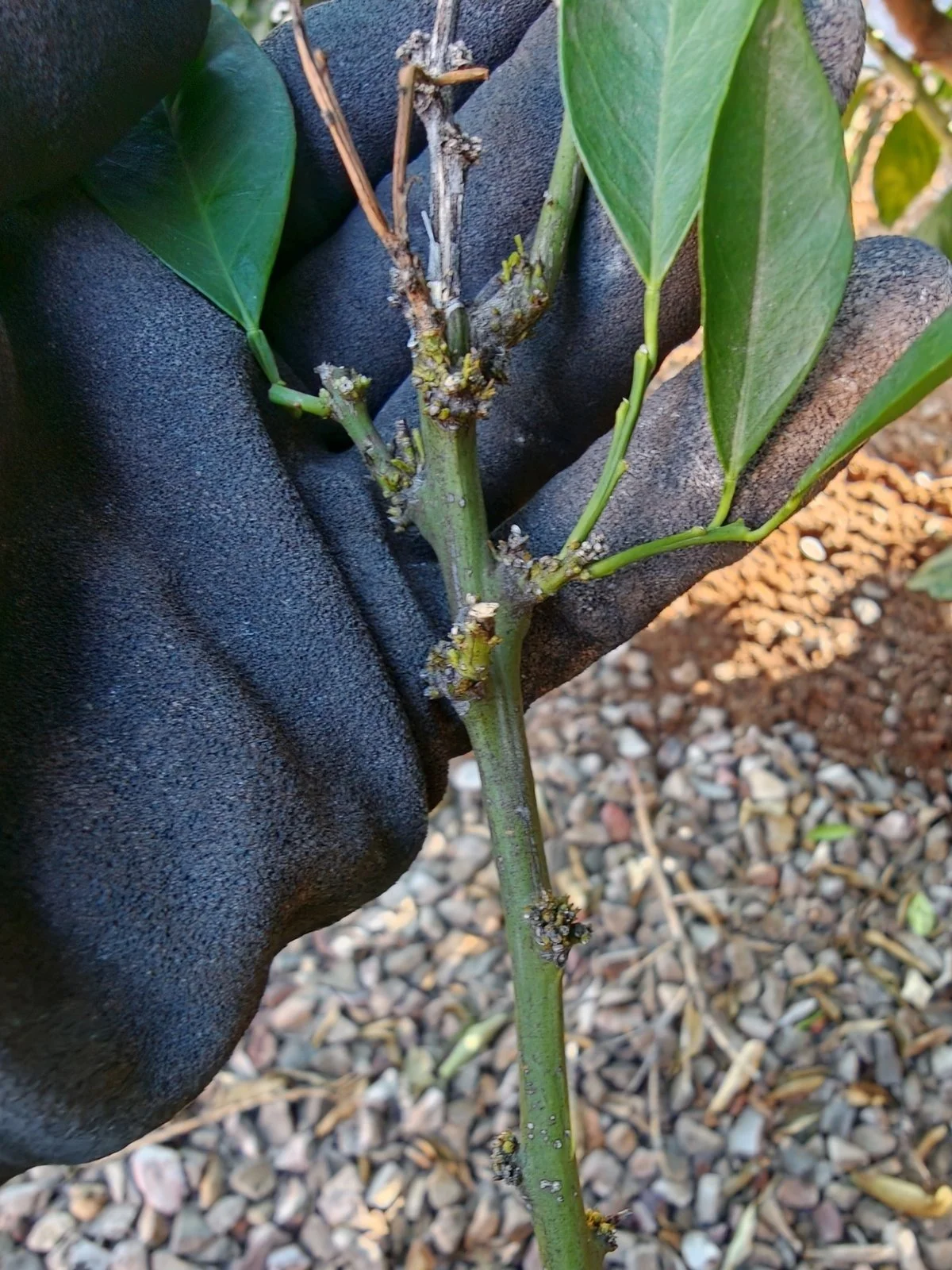
Citrus stem with suspected witches’ broom, some clusters already dried, with a gloved hand for scale.
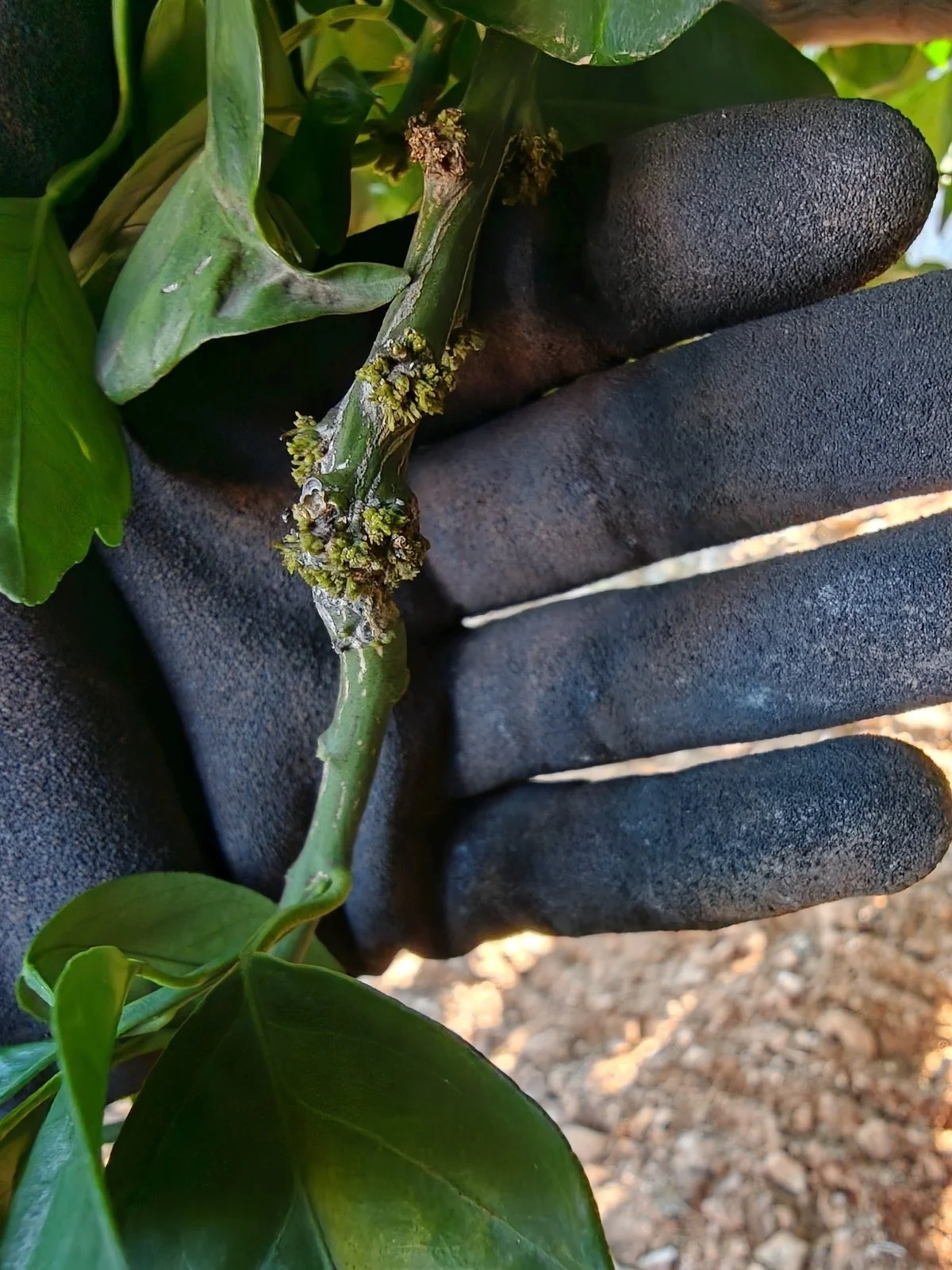
Closer view of the same kind of growth, with dense tufts of tiny green shoots packed on slightly swollen nodes.
